
Equity Insights for Self-Directed Investors
Independent equity research, multi-factor market screeners, and quantitative backtesting simulations
Latest research
New this week from the Technosight desk.
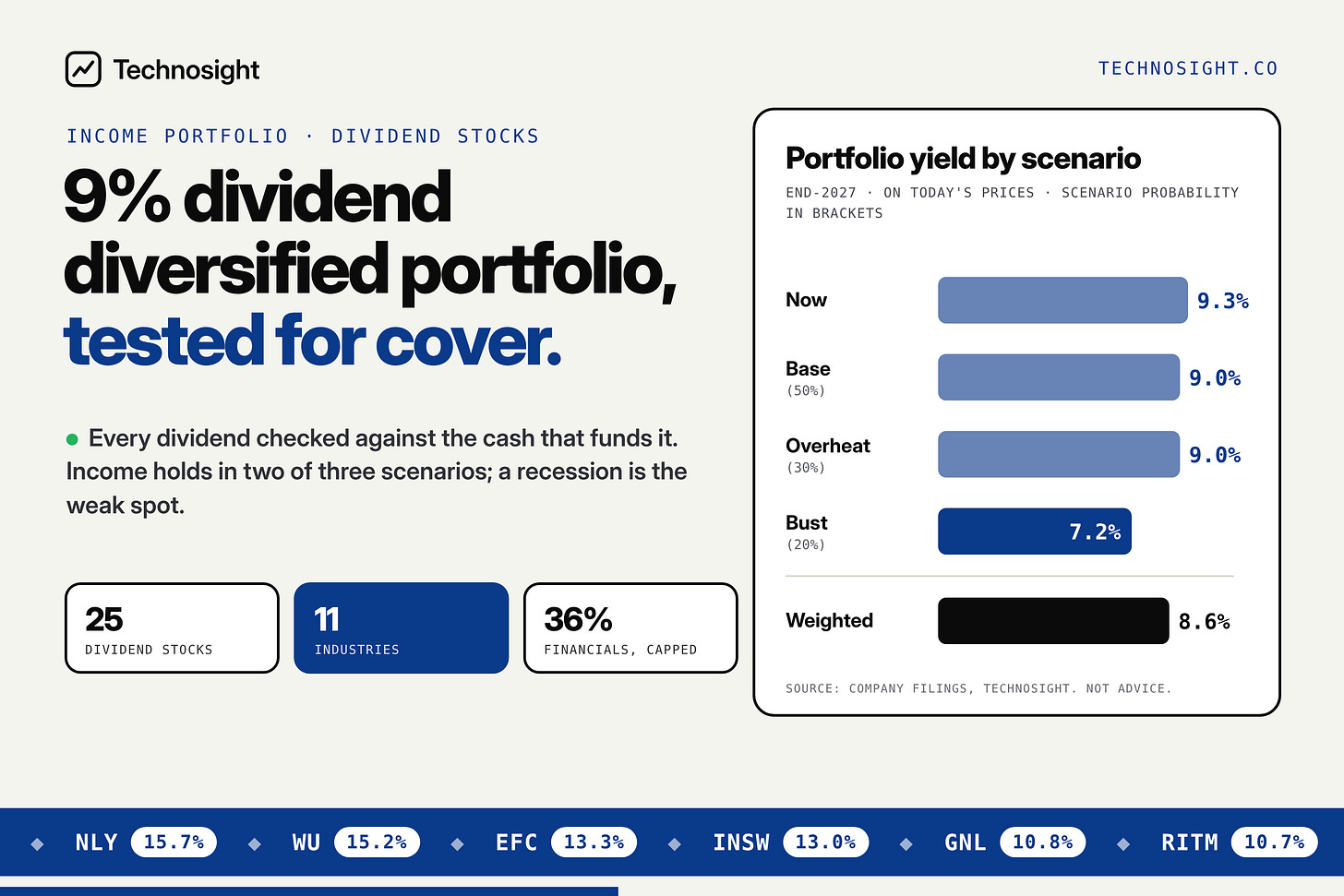
9% dividend diversified portfolio, tested for cover
Our dividend stocks pass the cover test that fits its business: distributable earnings for lenders, AFFO for landlords, free cash flow for operating companies. Financials pay the most but share one risk, the credit cycle, so they are held to 36%. Two dividends were cut this quarter, Blackstone Mortgage Trust’s to $0.30 and Telefónica’s by half, and both count at the new rate. In our end-2027 scenarios, income holds at about 9.0% in Base and Overheat, which carry 80% of the weight, and falls to about 7.2% in Bust as tanker, oil and thinly covered payers cut. Where share prices go nowhere, the dividends still pay about 9%. In a recession, the bonds have to carry more of the load.
Read the researchQuantitative Insights
Signals and themes from quant strategies after last week’s earnings: FTNT, F5 and healthcare
We reviewed 300 signals from our six quant strategies together. Strategies split into two families (trend and reversion) that read last week’s earnings in opposite ways. The trend family (Momentum, Momentum Omega, Trend Following, Volatility Breakout) is buying the stocks that jumped, such as Grid Dynamics (+24.5% on 30 Oct) and Regeneron (+11.5%). The reversion family (Mean Reversion, Statistical Arbitrage) is shorting them and buying the stocks that fell, such as Reddit (−22%). The most valuable signals are the ones both families back: F5 and Fortinet, each long across both families with no votes against them, each down about 20% after beating on the quarter and guiding to slower growth. Beyond the stocks, two themes stand out: healthcare catalysts lead momentum, and the market is selling companies that guide lower or pay heavily for AI.
Momentum Omega: the long-only backtest returned 35% a year. $100K grown to $400K in 4 years
Momentum Omega’s long-only Scenario D1 grew $100,000 to $400,039 in 2022–2026 (33.5% a year, Sharpe 1.00), with a maximum drawdown of −36.4%. The returns are before slippage and carry no benchmark, and seven of today’s ten holdings are AI hardware or memory names.
Six quant strategies, 2,000+ stocks a day: what the screens flagged this week
Every day we scan more than 2,000 US stocks with six quant strategies: momentum, volatility-adjusted momentum, mean reversion, statistical arbitrage, trend following and volatility breakout. A signal is a starting point; the research behind it decides whether it’s worth acting on. This week the momentum screens were led by healthcare, with Moderna’s Phase 3 cancer-vaccine win lifting SELLAS and Iovance alongside it, and Kodiak re-rating on Phase 3 eye-drug data. Volatility-adjusted momentum picked up Dell’s $95B AI server backlog. Mean reversion flagged five cybersecurity names as one stretched trade, and showed why every signal needs checking: one short was a takeover target, and one long was cheap because the company had withdrawn guidance. Below are examples from three of the strategies. Full lists, scores and the remaining strategies are for subscribers.
Equity Research
Company-specific fundamental valuations, DCF intrinsic models, and industry thematic research
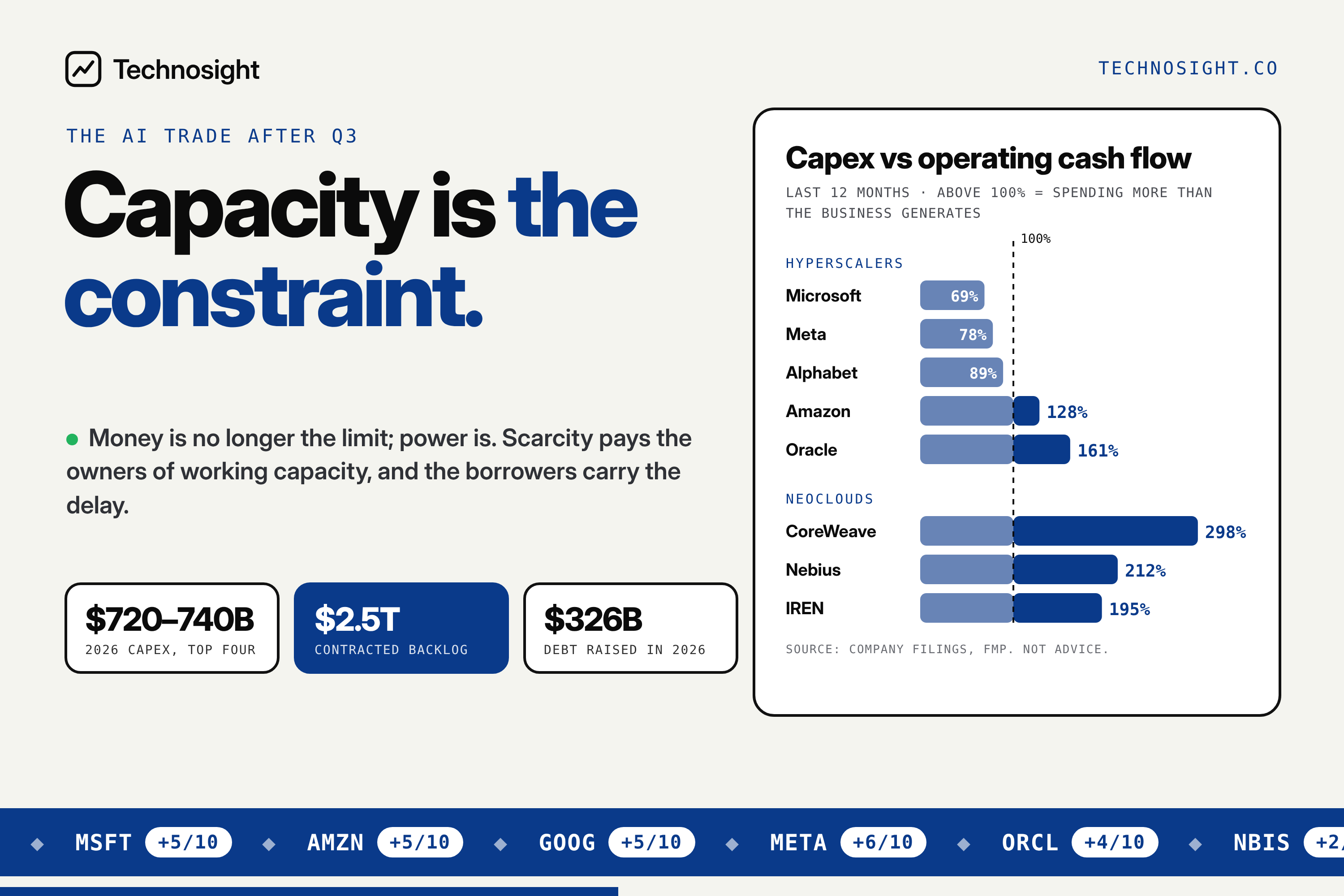
Hyperscalers and neoclouds after Q3: capacity is the constraint, investment flows to whoever has it
AI spending has not slowed; capacity has. With power, not money, setting the pace, the gains go to the companies that own powered capacity and pay for it from cash: Microsoft first, then Amazon and Alphabet. Meta and Oracle now fund the gap with new shares and debt, and the neoclouds carry the delay as interest. Of this month’s dips, Alphabet is the one our scores back: +5, below its 3-year EV/EBITDA low, and holding its March base at $272.
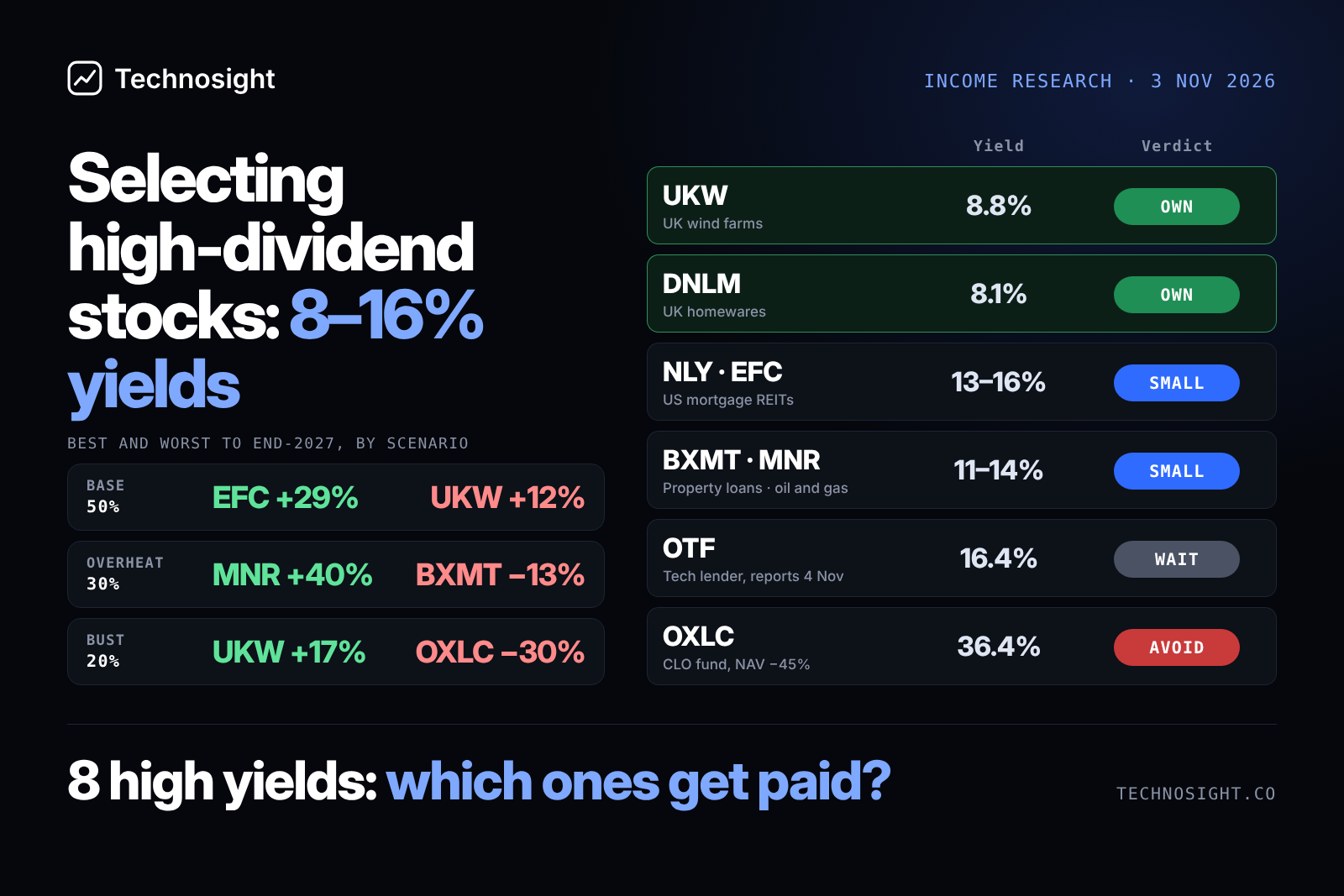
High-dividend stocks: which yields are real?
We tested eight high-dividend stocks against our three end-2027 scenarios to find stocks where you can plan on is 8% to 16% dividend yield: Greencoat UK Wind (8.8%) and Dunelm (8.1% including its special) as core income. Own small: Annaly (15.7%), Ellington Financial (9%, monthly), Blackstone Mortgage Trust (10.9% after its cut) and Mach Natural Resources (13.9%, variable) as an energy hedge. Wait: Blue Owl Technology Finance (16.4%), until results on 4 November show whether it cuts. Leveraged US lenders or credit funds lose in our Overheat scenario, where oil stays near $100 and the Fed raises rates to 4.75–5.00%. They borrow to hold loans and bonds, so higher rates raise their funding costs and cut the value of what they hold. They add income, but not protection. Keep them to a small position, and let the inflation-linked gilts, the UK holdings (UKW and DNLM) and MNR’s energy exposure do the hedging.
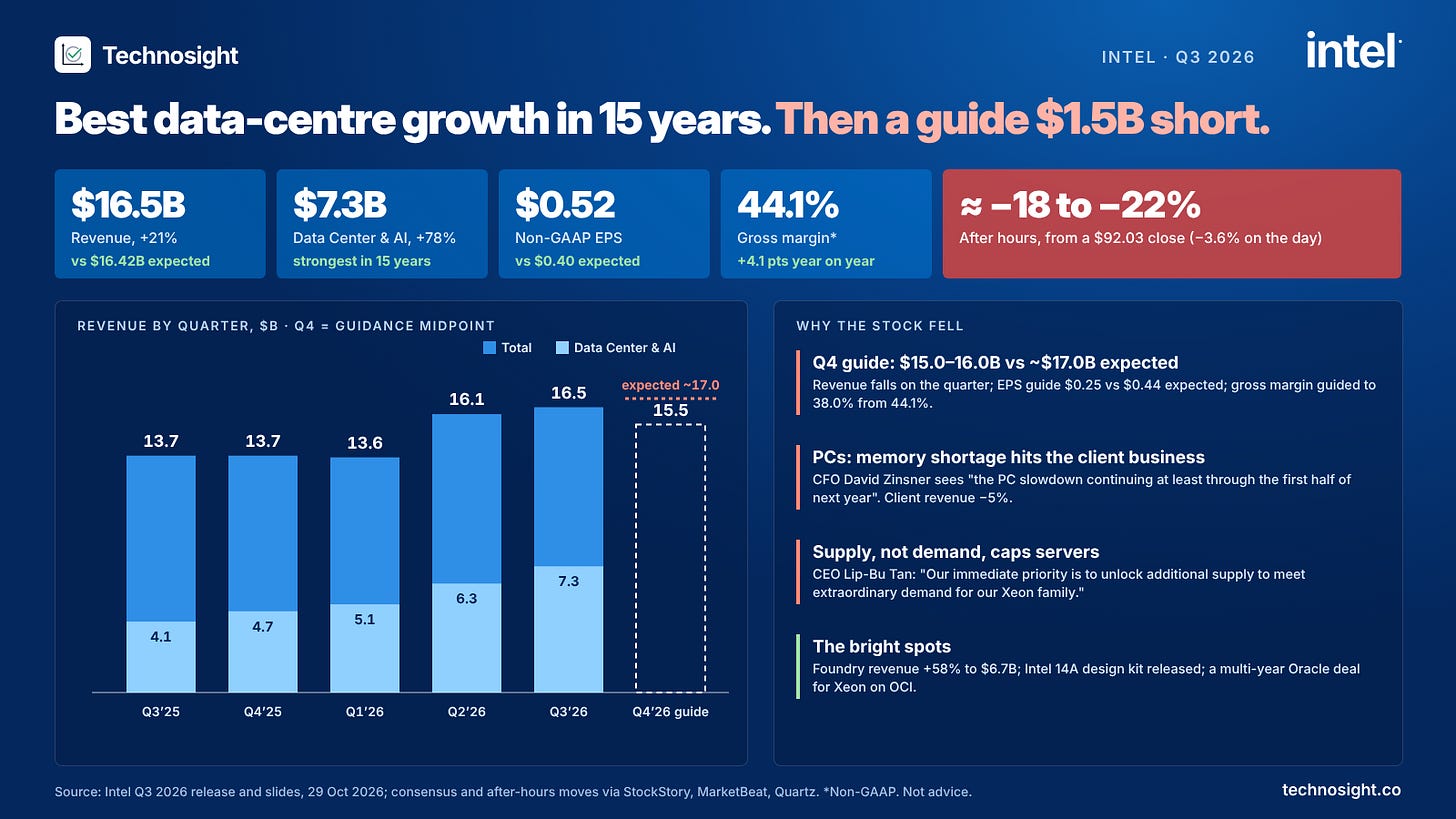
Intel Inc (INTC) earnings: data center jumps 78%, but Q4 guidance cut triggers 25% sell-off
Intel’s Q3 print delivered a stark contrast between a surging Data Center business (+78% YoY to $7.3B) and a severe guidance reset. While Q3 beat top- and bottom-line estimates ($16.5B revenue, $0.52 non-GAAP EPS), Q4 revenue guidance ($15.0B–$16.0B vs. $17.1B consensus) sent shares down ~25% pre-market. Management highlighted supply bottlenecks in substrate packaging, a memory-driven PC downturn running into H1 2027, and a $300M revenue hit from the Fab 28 explosion in Israel. With capex ramping for 18A/14A and 2027 expected to be cash-flow negative, we adjust the score from -2/10 to -1/10 Neutral.
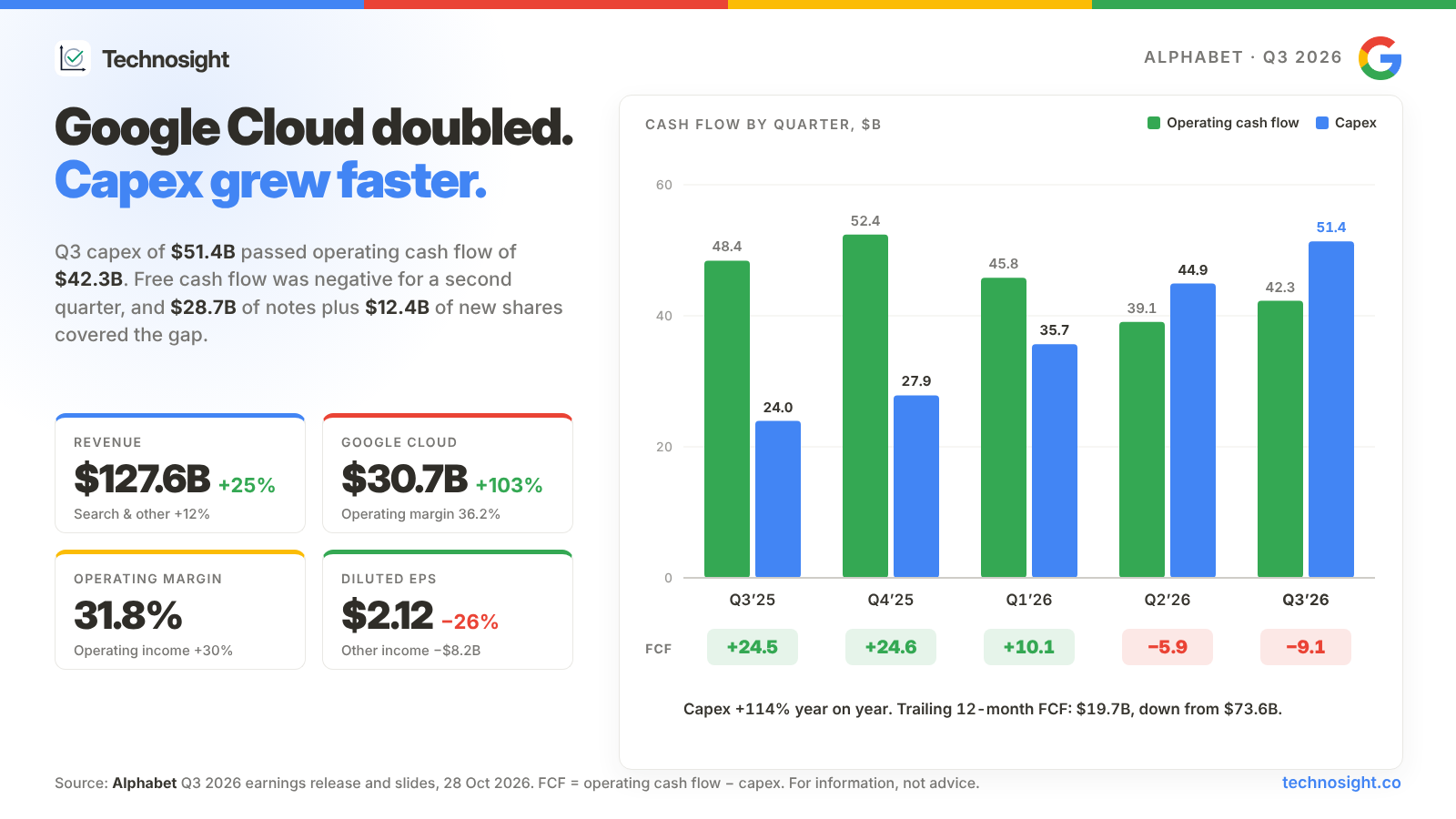
Alphabet (GOOG): Cloud doubles to $30.7B. -$9.1B cashflow and Search squeeze send price down 12%
Alphabet’s Q3 had two opposing forces: Google Cloud doubled revenue with an 80% growth beat and a $561B backlog, but Search slowed as AI answers monetised below classic queries, and $51.4B in capex drove free cash flow to -$9.1B. With the stock down ~11% pre-market to $287, the market is pricing in cash burn and Search cannibalisation while discounting the long-term value of proprietary TPU hardware and Cloud momentum. At ~19x 2027 EPS, the valuation offers upside, but near-term pressure remains until cash flow catches up.
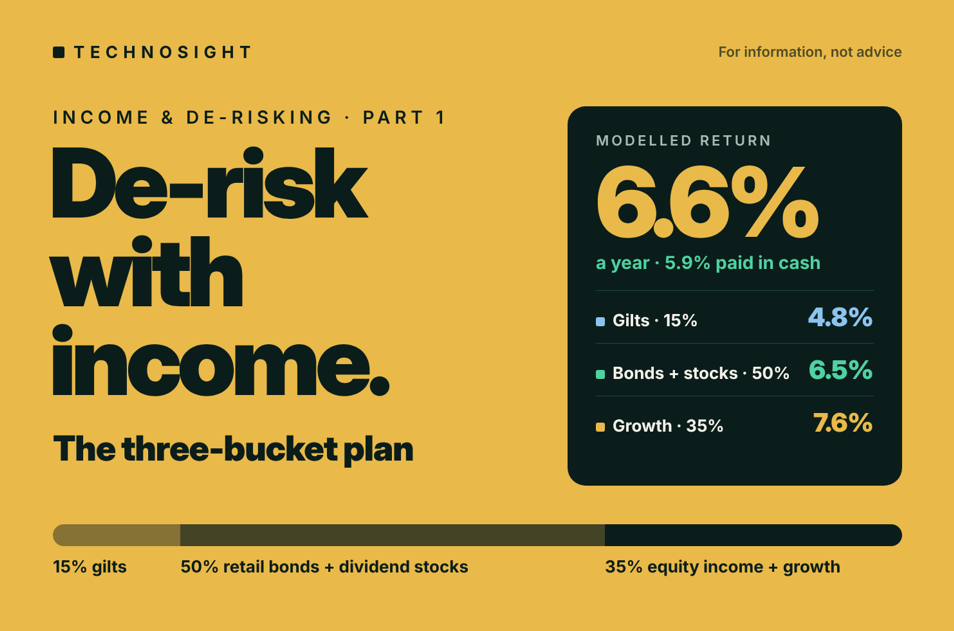
De-risking a portfolio with gilts, dividend stocks and bonds for a modelled 6.6% a year
After five months of near-zero returns in US equities, this plan moves half a portfolio into assets that pay on schedule. Bucket 1 holds two short gilts to fund two years of spending. Bucket 2 holds four UK investment-grade retail bonds and eight dividend stocks with strong free cash flow and whose dividend rose YoY. Bucket 3 holds two Premium Income and High Dividend ETFs. Modelled return: 6.6% a year, of which 5.9% is in cash. The trade-off: to be rebalanced if the AI rally resumes.
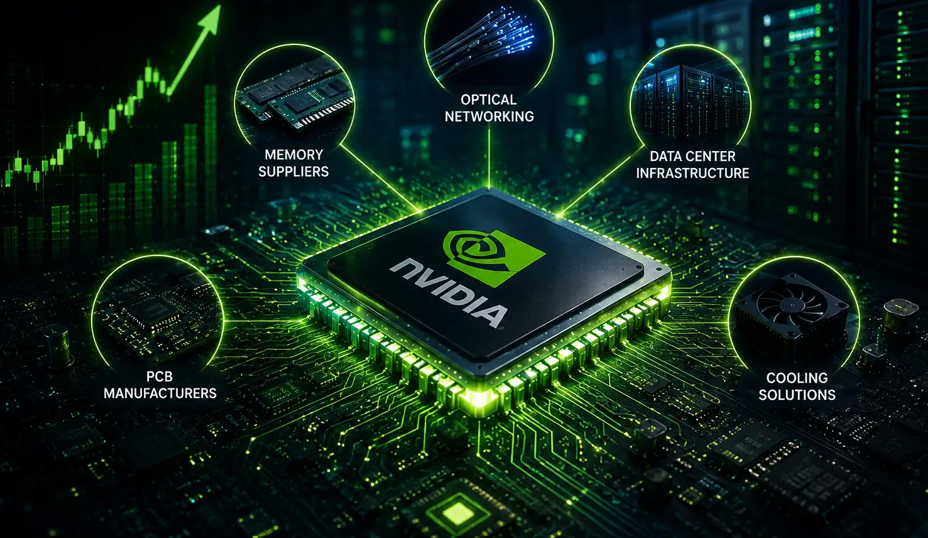
Nvidia’s $279B supply bill and $48B in stakes: a map of AI’s shortages and demand props
Nvidia is paying for the capacity it depends on, and the payments show where AI infrastructure shortages are. Supply and capacity commitments rose from $119B to $279B in one quarter, “primarily related to memory,” with $267B due by FY29. Supplier stakes are small beside that: $2B each in Lumentum and Marvell, Coherent and Synopsys. Non-marketable equity grew from $3.8B to $47.9B in a year, a further $25B is committed to AI model makers and infrastructure financiers, and guarantees reach up to $108.5B. The commitments rank memory as the tightest constraint, then power and data-centre capacity, then optics. The exposure runs both ways: Nvidia’s $23.7B of first-half equity gains and its commitments depend on the demand that payments help to create.
How Nvidia's rivals compete for OpenAI, Meta and Anthropic: AMD’s $80+B warrants and Broadcom’s $42B loan
Nvidia sells roughly 70% of AI chips at a 75% gross margin, and OpenAI, Meta and Anthropic each buy from it and from at least one rival. Its rivals cannot win on specification alone, so they pay to be the second source: AMD with warrants worth $84.3B to each of Meta and OpenAI, a 50-100% discount if AMD earns $14.1B to $28.1B per gigawatt; Broadcom with up to $42B of loans to Anthropic; and Cerebras with a warrant to OpenAI. Nvidia answers with investments in the same buyers and outside financing, not price cuts.
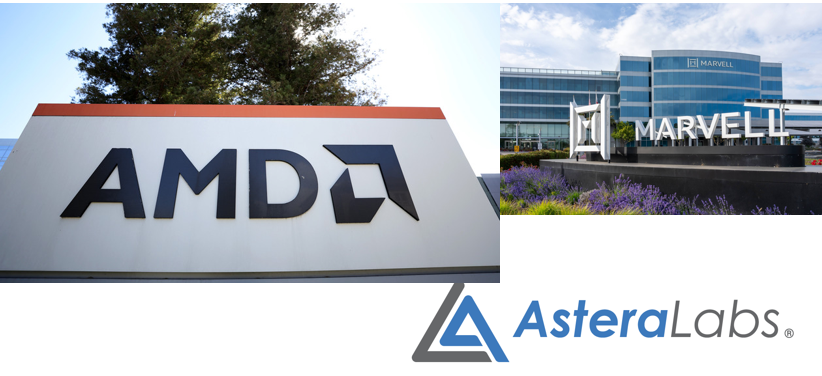
Companies who dilute investor equity to earn revenue: $173B warrants by AMD
Four of the biggest AI chip buyers are paid in their suppliers’ stock for buying. Only Astera booked a cost so far (2.6% of Q2 revenue), but at today’s prices the warrants are worth about $2B at Marvell and $173B at AMD. The bill for these warrants arrives when tranches vest.
Wafer Fab Equipment: $150B market, 23% YoY. Foundry/Logic and HBM Intensity drive growth
Wafer-Fab Equipment (WFE) spending has accelerated to $150B+ in 2026 as AI infrastructure transitions to complex 3D integration. While macro forecasts project ~20%+ annual growth through 2027, top-line figures mask sub-segment divergence. Foundry/Logic (led by TSMC’s N2/A16 transition) and DRAM (driven by HBM3e/HBM4 wafer intensity) take ~75% of market growth. Stock selection hinges on tool exposure: ASML commands a leading-edge lithography monopoly constrained only by shipping capacity; KLA (KLAC) offers high-margin (+62.4% GM) as gate-all-around adds defect steps; Lam Research (LRCX) is cushioned by a 37% service base; and Applied Materials (AMAT) provides broad multi-node exposure.
Hyperscalers' two-customer problem: $1 trillion of commitments or who breaks first
Two AI labs, OpenAI and Anthropic, sit inside the backlogs of all four clouds, and the clouds also own stakes in them. Anthropic’s IPO filing shows at least $518B of compute commitments, $252.5B of it with the three clouds, against ~$4.6B of 2025 revenue; OpenAI has committed $250B to Microsoft, $138B to Amazon and about $300B to Oracle. Together the two labs have committed about $940B to the four clouds. Lab-linked contracts are roughly 22% of Alphabet's $514B backlog, 45-50% of Oracle's $664B and Amazon's $496B, and ~46% of Microsoft's $678B. On the equity side, Amazon has committed up to $83B across both labs, Alphabet up to $40B and Microsoft holds ~25% of OpenAI. Cloud growth therefore depends on lab financing as much as on enterprise demand. Alphabet is the least exposed. Oracle, funded by debt, is the most.
Who wins in semiconductor design
Chip design captures more durable value than chip manufacturing, and within design, the EDA "toll booth": Synopsys, Cadence, and Siemens EDA, controlling ~85% of the the market is the lowest-risk way to own the AI semiconductor buildout. Every company from Nvidia to a hyperscaler building its own silicon, still license EDA software to produce a chip. Between the two investable names, Cadence's stronger execution and margins are against Synopsys's larger scale and bolder (if debt-funded) bet on Ansys becoming a second growth engine.
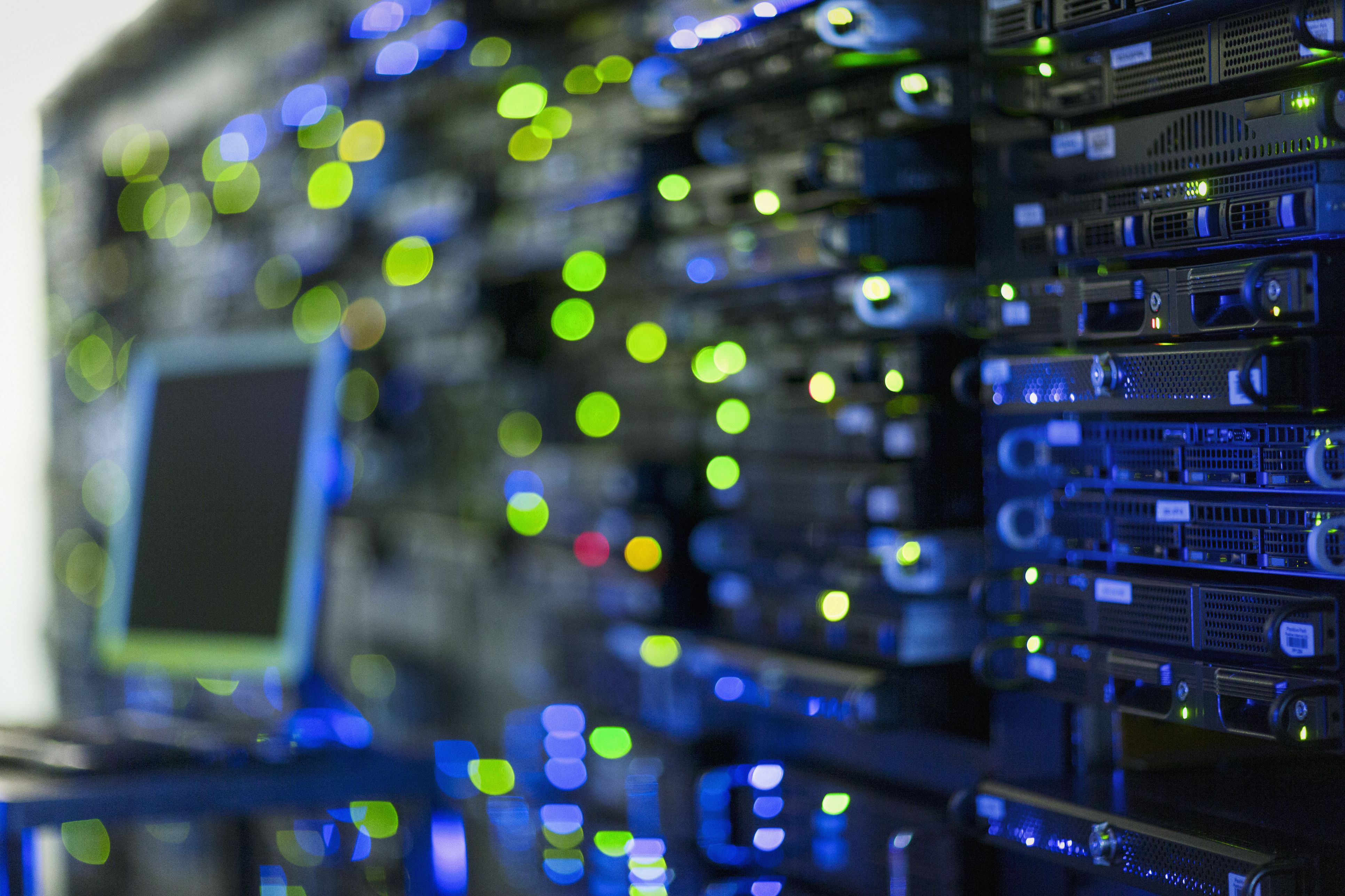
AI and Networking: don’t bottleneck the compute
AI's networking impact stems from the escalating costs of GPU racks, which makes idle bandwidth expensive. Hyperscalers are pushing for the move from 800 gbps to 1.6 tbps bandwidth and pulling the AI-interconnect to grow 3x faster than networking hardware overall. Arista (+5/10) captures that shift best and with the strongest validation; Ciena (+4/10) and Cisco (+4/10) sit on the optical-component backlog and legacy incumbent sides respectively; and Nvidia (+7/10) and Broadcom (+3/10) bookend the underlying fight over whether bandwidth runs on proprietary or open standards. Worth watching: how much of this spend is incremental versus funded by CIOs pulling budget from everything else.

The AI Cybersecurity: “AI Patching Race”, who leads and what to invest in
AI has collapsed the cybersecurity patch window from weeks to hours, and enterprise security budgets are responding. Six vendors best positioned to capture that spend split into two groups on the evidence gathered here. PANW and CRWD have the strongest product recognition (both are Magic Quadrant Leaders, and PANW shares Gartner's new "Market Shaper" in AI-security with just one other name) but also the richest valuations, meaning the AI-safety story looks priced in. FTNT, ZS, QLYS, and FFIV all have Gartner recognition (FFIV is the second Market Shaper in AI-security next to PANW), yet the market hasn't fully caught up. A gap between validated product standing and current price puts all four on our watchlist.
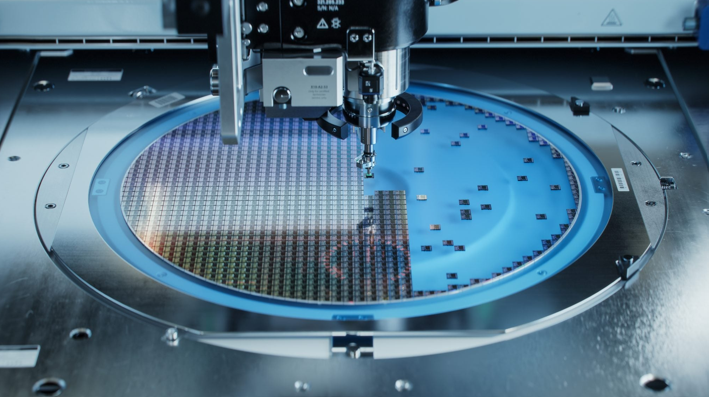
AI and Advanced Packaging: the developments, who's leading, and what to own
Bottlenecks are deepening across substrates, glass, thermal and optics. Ex-TSMC exec called brute-force scaling ‘violent’. The highest conviction: TSM +5/10 and KLIC +5/10
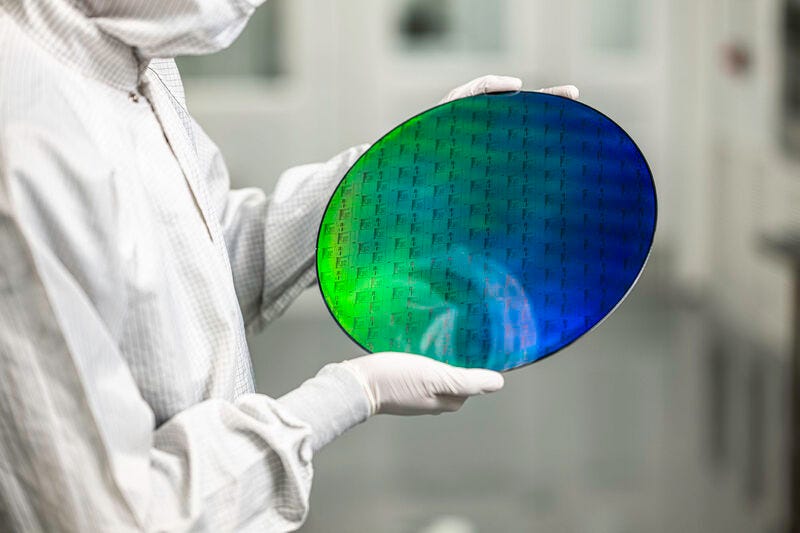
AI and Laser Shortage: one scarce semiconductor substrate drove 10-100x rallies, will they rally again?
High confidence that the scarcity persists 2- 4 years, enough for a rally. Market is bullish / execution is strong at AXT (+4/10) and AAOI (+5/10), neutral to bearish on LITE (+5/10) and COHR (+2/10)
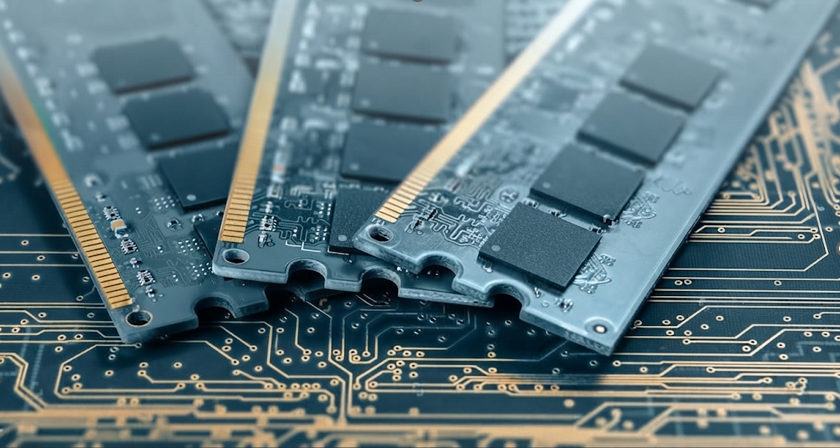
Memory: how long will the thesis last? Lessons from Micron, SK Hynix and SanDisk
According to SK Hynix, memory shortage will last past 2030. Construction timelines and move to HBM means the earliest capacity in mid 2027. What this mean for individual stocks, depends...

SaaS and Agentic AI: what have we learned from CRM, NOW, ADBE and TEAM?
AI tested what kind of incumbency was load-bearing: depth and breadth of data integration and structured context are the moats. NOW and TEAM are high conviction; CRM - a maybe, ADBE - a no.
No articles match your search criteria.
Browse by sector
The same research, grouped by theme.