
Intel Inc (INTC) earnings: data center jumps 78%, but Q4 guidance cut triggers 25% sell-off
Intel’s Q3 print delivered a stark contrast between a surging Data Center business (+78% YoY to $7.3B) and a severe guidance reset. While Q3 beat top- and bottom-line estimates ($16.5B revenue, $0.52 non-GAAP EPS), Q4 revenue guidance ($15.0B–$16.0B vs. $17.1B consensus) sent shares down ~25% pre-market. Management highlighted supply bottlenecks in substrate packaging, a memory-driven PC downturn running into H1 2027, and a $300M revenue hit from the Fab 28 explosion in Israel. With capex ramping for 18A/14A and 2027 expected to be cash-flow negative, we adjust the score from -2/10 to -1/10 Neutral.
-1/10 Neutral | Price $69 | Target $103 (+49%, stale targets) | Zacks Strong Buy (#1)
Research series: update following Intel’s Q3 FY26 (Oct 29, 2026) earnings. Earlier research: Intel (INTC): can Intel become a TSMC alternative? (Sep 30, 2026); Intel (INTC): CPU and GPU squeeze (Sep 30, 2026), AMD: CPU and GPU squeeze (Sep 30, 2026).
Intel designs and makes x86 processors and reports three segments: Client Computing (PC chips, 49% of Q3 revenue), Data Center and AI (Xeon, AI accelerators, 44%) and Intel Foundry (manufacturing, mostly for Intel itself). It is building 18A and 14A for outside customers; the US government holds 8.4%.
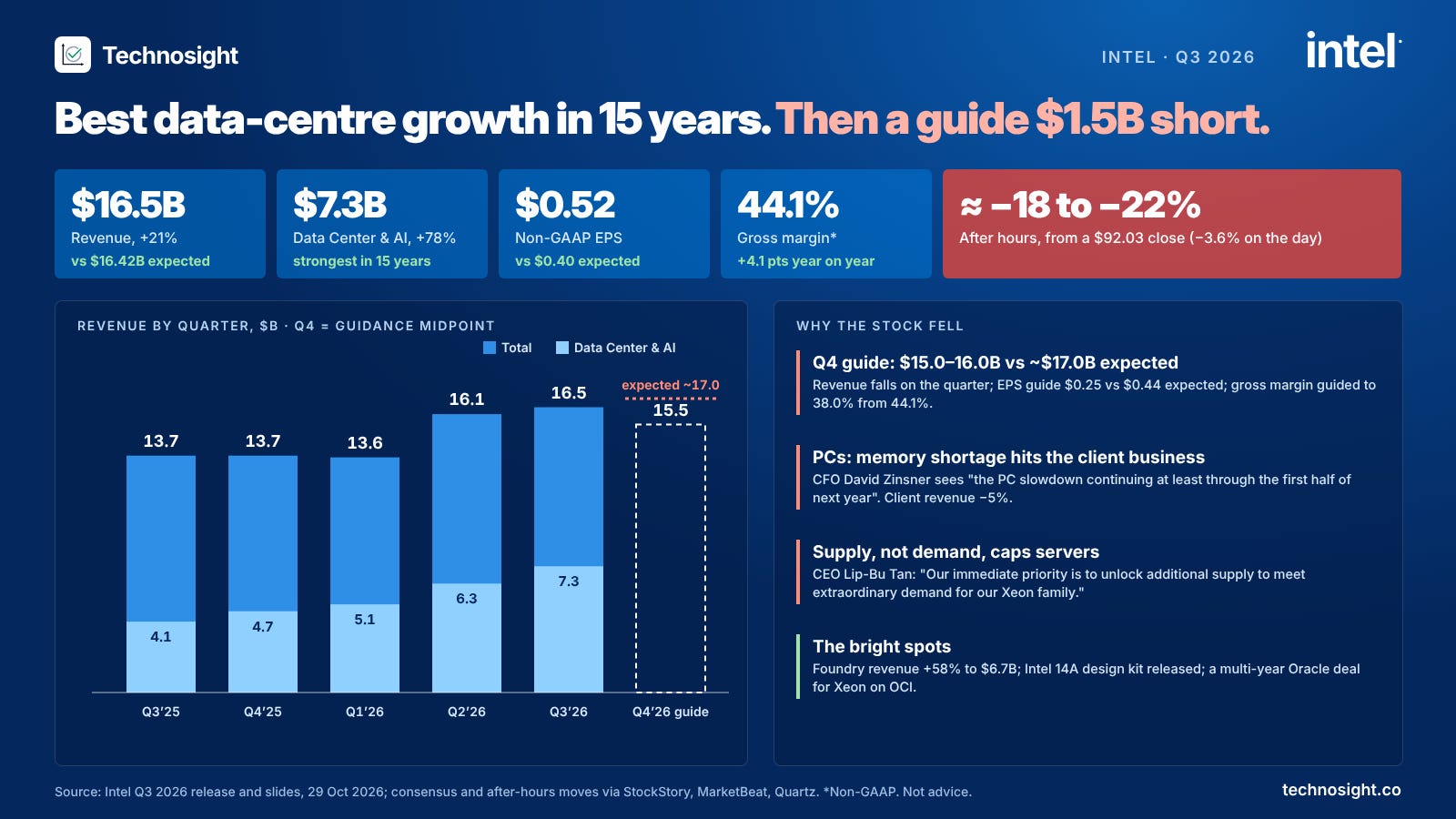
Q3 2026 update
Intel reported Q3 2026 (quarter to 26 Sep). Revenue was $16.5B, up 21%, inside its own $15.8B-$16.8B guide and in line with the $16.56B consensus. Non-GAAP EPS was $0.52 against $0.41 expected, and non-GAAP gross margin was 44.1% against a 42% guide (Intel release; FMP; Reuters, 29 Oct).
The guide sank the stock. Q4 revenue of $15B-$16B against $17.07B expected, non-GAAP EPS $0.25 against $0.43, and gross margin about 38%. Intel blamed a PC slump caused by memory shortages, expected to last at least through the first half of 2027, a shortage of packaging substrates, and the 14 Oct explosion at Fab 28 in Israel, which will cost about $600M of revenue over Q4 and Q1. Shares fell ~21% after hours and 25% pre-market.
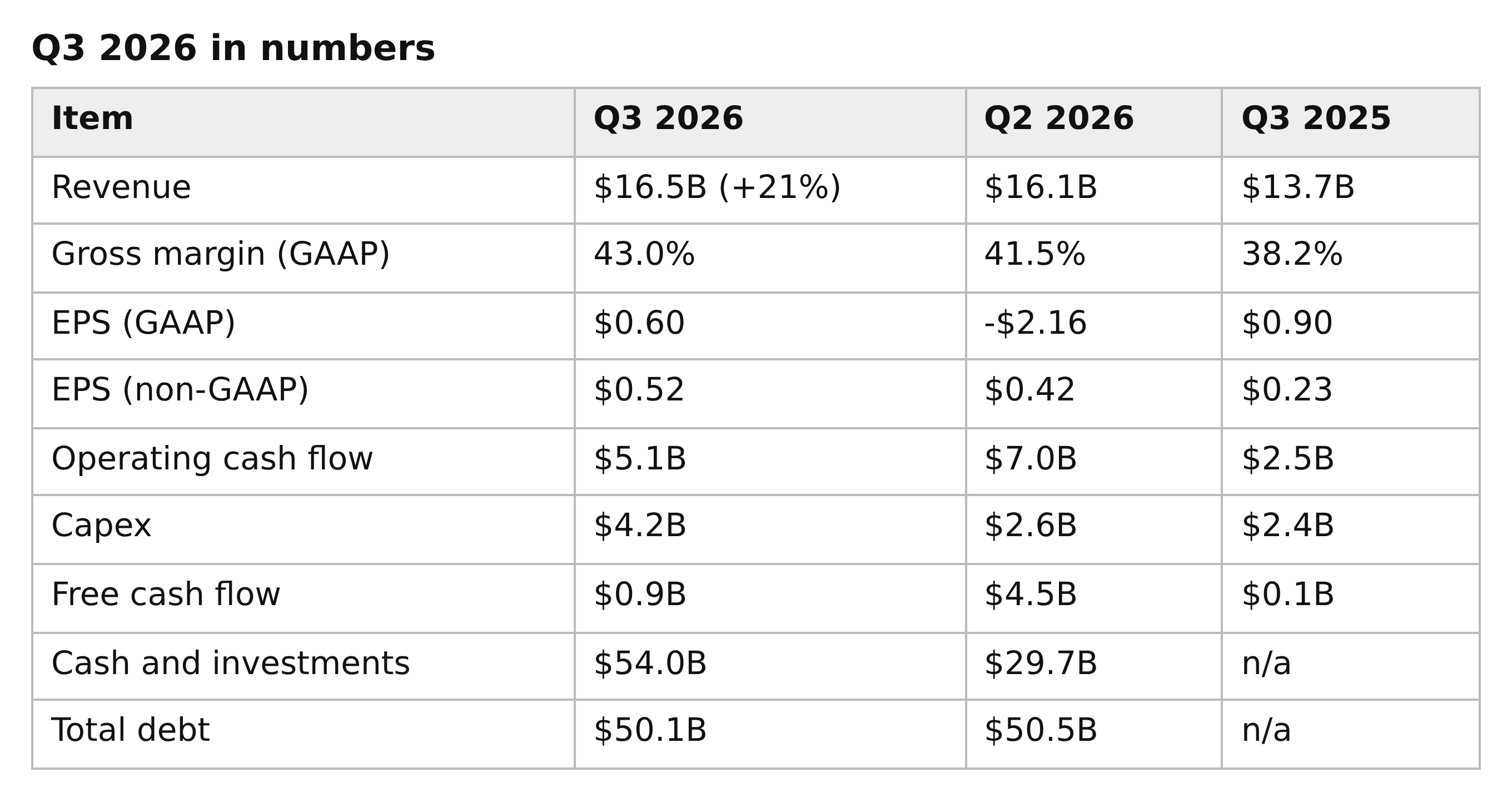
Growth in brackets is YoY. Cash rose after the $20B share offering in August. Q3 2025 GAAP EPS included one-off gains.
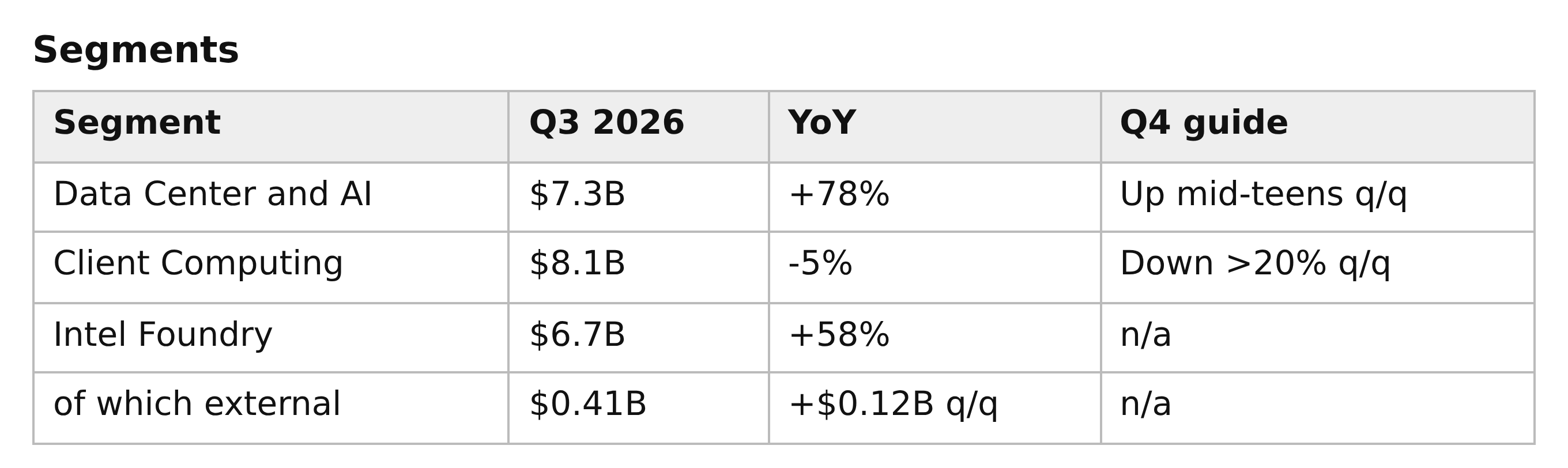
Foundry revenue is mostly Intel’s own products; it lost $1.9B in the quarter. The Client segment is now called CCPG.
Data center is now almost as large as PCs. DCAI grew 78% and its operating income tripled to about $3.0B. Intel now expects server CPU units to grow more than 30% in both 2026 and 2027, and says it could sell more if it had the supply.
PCs are the problem. Client revenue fell 5% and is guided down more than 20% next quarter, as memory prices push PC makers to cut orders.
Earnings call (29 Oct) messages
Supply, not demand, limits servers. Tan: the priority is “to unlock additional supply to meet extraordinary demand for our Xeon family”. Intel expects the industry to stay supply-constrained through 2027 and into 2028, and says several customers want long-term supply agreements (LTAs).
Agentic AI is the server thesis. Intel estimates the server CPU market could grow up to five times, from $40B to over $200B in five years, driven by AI agents that need CPUs to orchestrate work (call summaries). This is the “CPU as control plane” argument from the September conferences, now with a number attached.
PCs stay weak into 2027. Management expects the memory-driven PC inventory correction to run at least through Q1, sees no memory improvement in 2027, and guides client revenue down more than 20% in Q4.
Foundry: progress, no names. External foundry revenue was $411M, up $118M on the quarter, helped by a one-off customer programme. Tan is “engaged with a couple of highly strategic customers” and “increasingly confident” in 18A-P for outside customers. Intel released the 14A 0.9 design kit in October and plans 14A risk production next year. No customer was named; Google, Nvidia and Apple were not mentioned.
Packaging demand meets a substrate shortage. EMIB and EMIB-T packaging gained “significant external customer traction”, but Tan said a shortage of advanced organic substrates “is also impacting our ability to scale output”. Capex and purchase commitments will “increase significantly over the next several quarters”.
Strategy and moat
Intel is running two businesses at once: a product company (Xeon server CPUs, Core Ultra PC chips, the GPU D-series for AI inference) and a foundry that wants outside customers for 18A-P and 14A and for its EMIB packaging. The $20B August share offering pays for the foundry build-out; capex is rising again.
Moat
x86 and the server installed base. Only Intel and AMD make x86 chips; Granite Rapids (Intel 3) is one of Intel’s fastest-ramping server products, and Clearwater Forest (18A) ships for revenue (call summaries).
US leading-edge manufacturing. Intel is the only US-headquartered company making leading-edge logic chips; the US government holds 8.4% of the shares (2026 proxy).
Packaging. EMIB and EMIB-T are cheaper alternatives to TSMC’s CoWoS, with reported interest from Google (SemiAnalysis; Digitimes, Aug 2026).
Threats. PC revenue falling with memory prices, AMD and Arm in servers, no confirmed large foundry customer, and a fab outage in Israel.
What it means for the trade. A 25% fall to the top of the April gap has already priced much of the guide. Potential short from a rebound into the broken $80-85 floor.
What changed since Sep 30
I wrote two articles about Intel based on Q2 2026: “Intel Corp (INTC): can Intel become a TSMC alternative?” and “Intel Corp (INTC): CPU and GPU squeeze”. Both were published on 30 Sep 2026. -2/10 SHORT at $117, target $117, sell zone $136-141. Based on Q3, the score is -1/10 SHORT at $68.84.
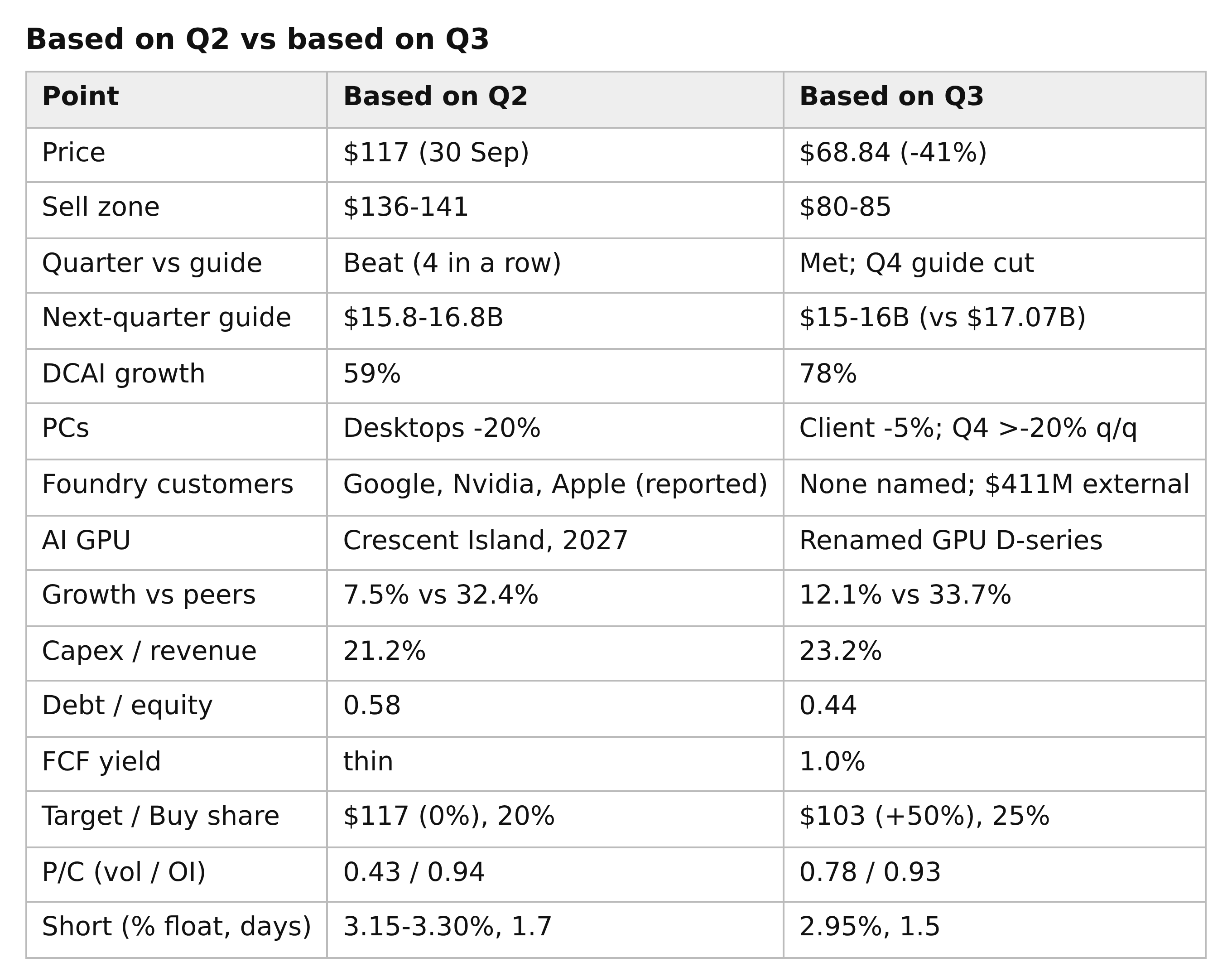
FMP trailing twelve months, same ten peers. P/C: Barchart. Short interest: FINRA 15 Oct.
The CPU squeeze became a supply squeeze. Data center grew 78%, capped by substrates and the Fab 28 outage, not by AMD or Arm.
The TSMC-alternative question is still open. No customer named, $411M of outside foundry revenue, and packaging is itself substrate-limited.
PCs are the new weak point: the whole client segment, not only desktops, falls more than 20% next quarter.
The price fell further than targets. INTC lost 21% before results (Fab 28 explosion, 14 Oct) and 25% on the guide. Every 30 Oct target change was a cut, so the +50% gap is mostly stale targets.
The balance sheet improved; cash flow did not. The $20B offering lifted cash to $54.0B and cut debt/equity to 0.44, but capex is rising “significantly”.
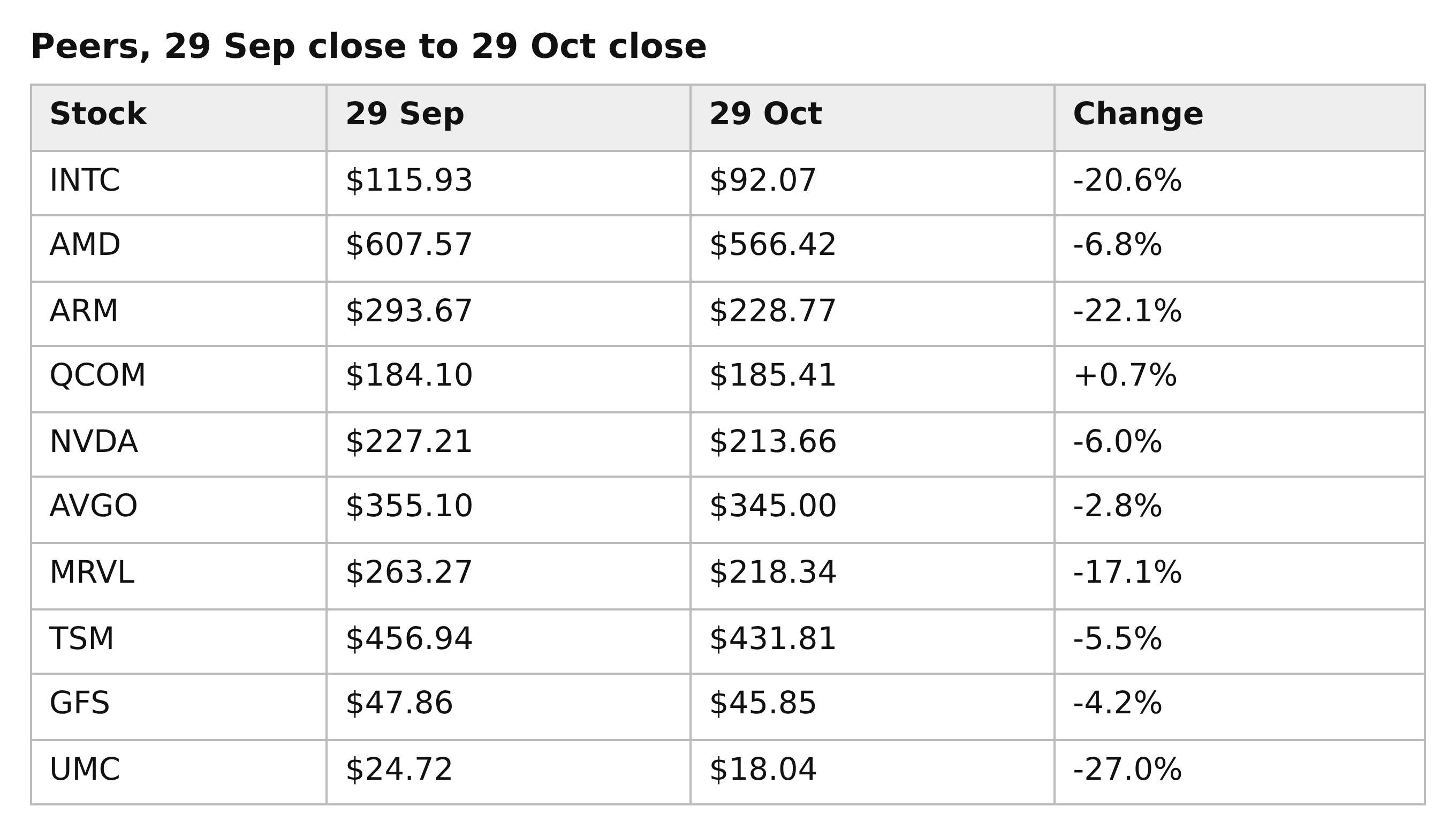
FMP closes. INTC fell a further 25% pre-market on 30 Oct. Samsung’s US over-the-counter line (SSNLF) has no current FMP price and is left out.
Takeaway. Before results Intel already fell with Arm, Marvell and UMC, while Nvidia, Broadcom and TSMC lost only 3-6%: the market is selling turnaround and second-tier stories and keeping the AI leaders.
Price action
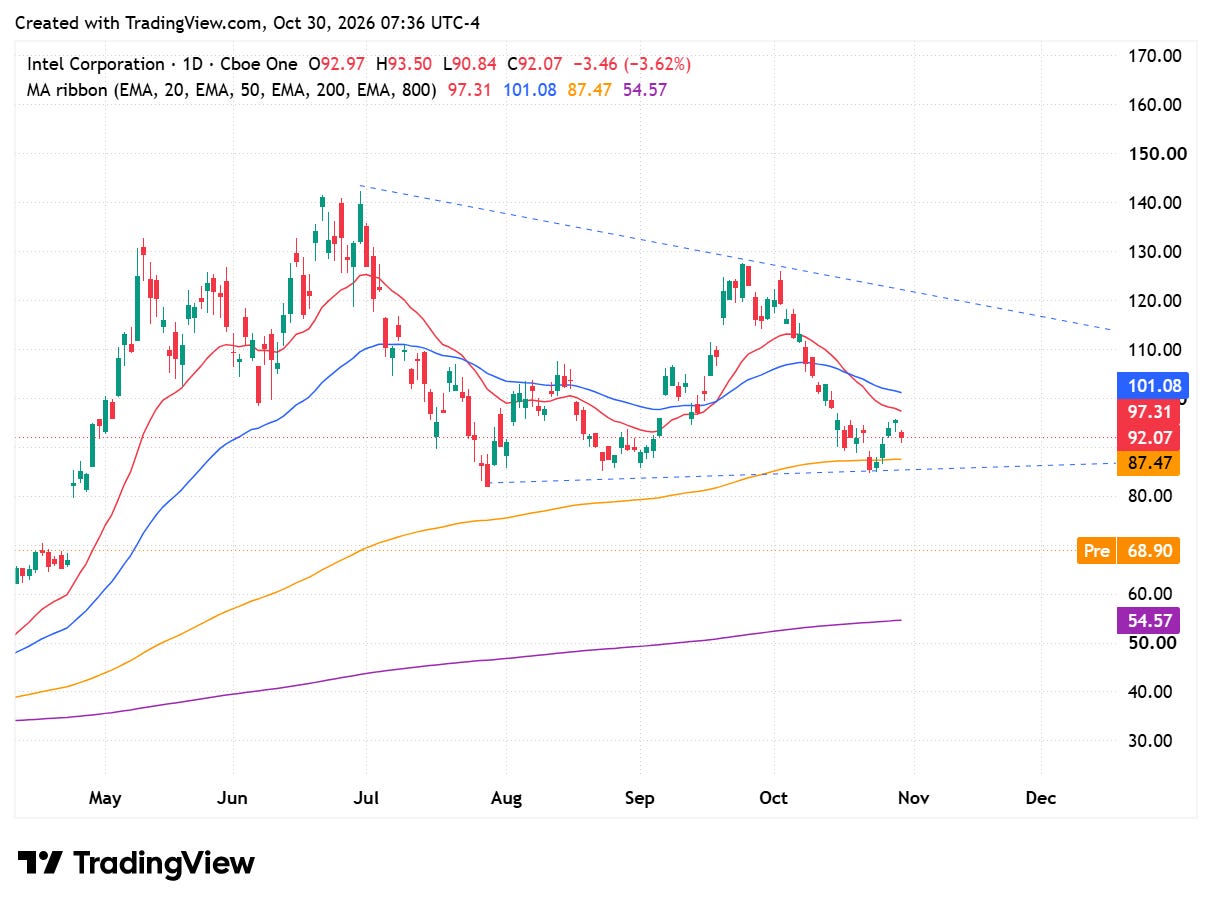
INTC rose from $40.63 (30 Mar) to $142.35 (30 Jun), then traded in a falling range: lower highs ($127.44 on 24 Sep) above a flat floor at $82-85 (29 Jul, 22 Oct). It closed at $92.07 before results and is quoted at $68.84, below the floor and at the top of the April gap.
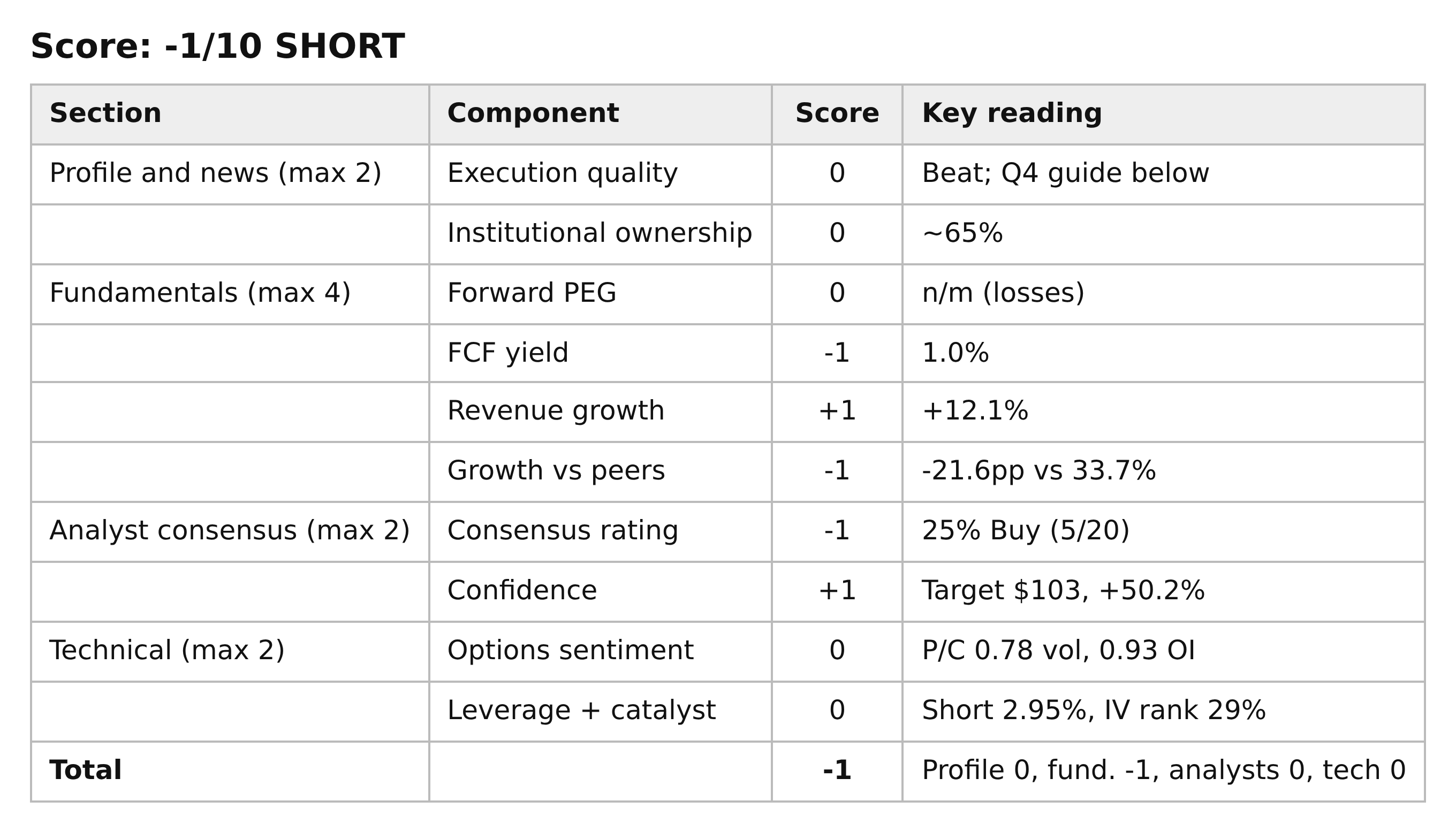
Analyst targets sit 50% above the crashed price (+1), and 12.1% growth adds +1. Against that, the 1.0% free-cash-flow yield, growth 21.6 points below peers and only 25% Buy ratings each score -1. Execution, ownership, PEG and both technical readings are neutral.
Fundamental analysis
All figures are trailing twelve months to each company’s last reported quarter. Intel, TSMC and UMC include September; the other peers run to June-August. TSMC and UMC report in Taiwan dollars, Samsung in won, converted to USD. Intel’s market value, P/E, PEG and FCF yield are at the $68.84 quote; peers at the 29 Oct close.
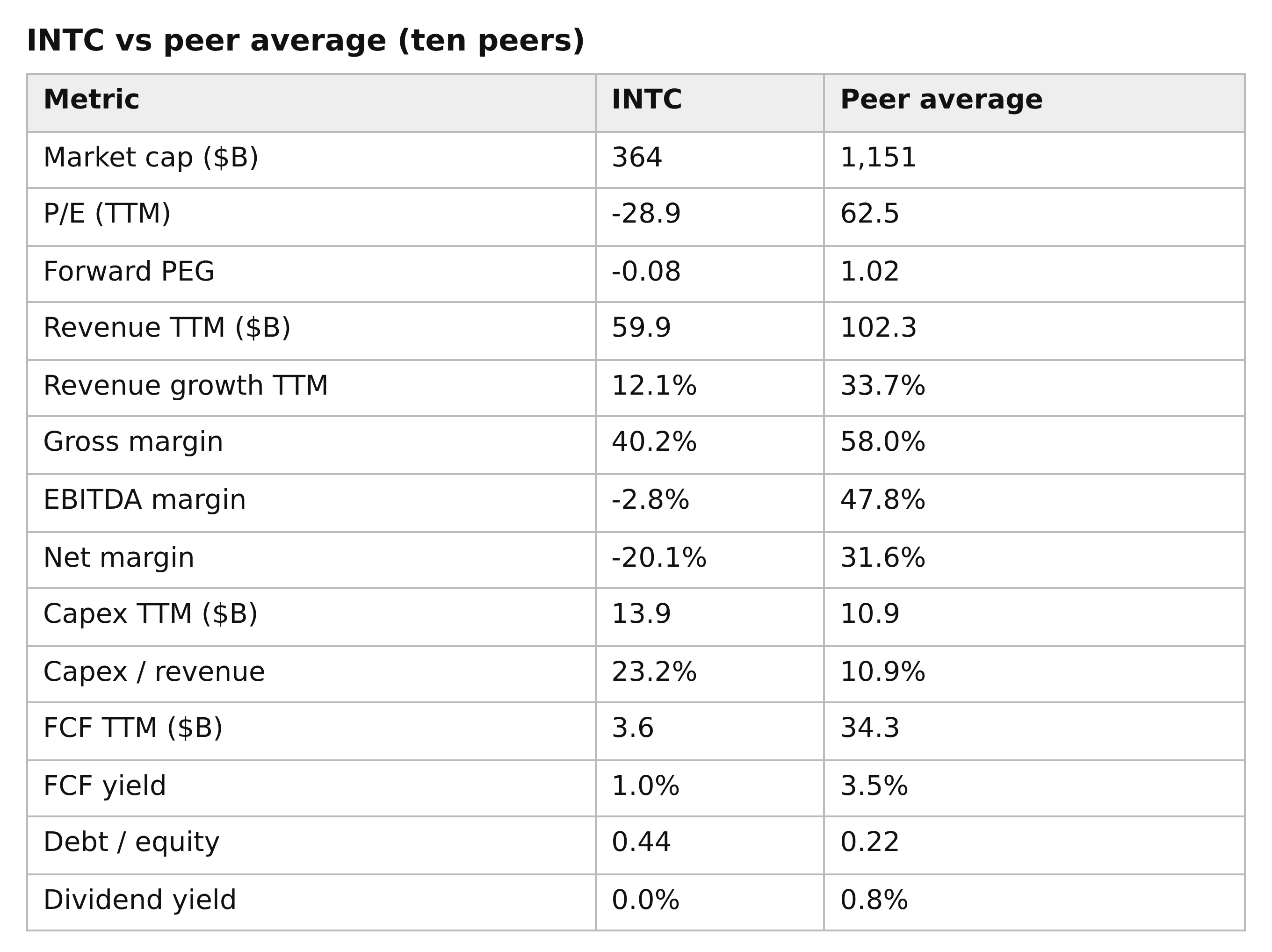
Peers: AMD, ARM, QCOM, NVDA, AVGO, MRVL, TSM, SSNLF, GFS, UMC. Samsung’s figures are for the whole group, including memory.
Growth: 12.1% is up from 7.5%, but still ninth of eleven, ahead of only Qualcomm and GlobalFoundries.
Margins: the trailing net margin is still -20.1% because Q2’s $11.0B loss (restructuring) is in the window; Q3 alone was profitable ($3.3B GAAP).
Investment: capex is 23.2% of revenue, more than double the peer average, and rising.
Balance sheet: debt/equity fell to 0.44 after the $20B offering; still twice the peer average.
Score: -1/4 (PEG 0, FCF yield -1, growth +1, growth vs peers -1).
Peers
Intel competes on two fronts. On chip design: CPU rivals (AMD, Arm, Qualcomm) and AI accelerator and custom-chip rivals (Nvidia, Broadcom, Marvell). On manufacturing: leading-edge foundries (TSMC, Samsung) and mature-node foundries (GlobalFoundries, UMC).
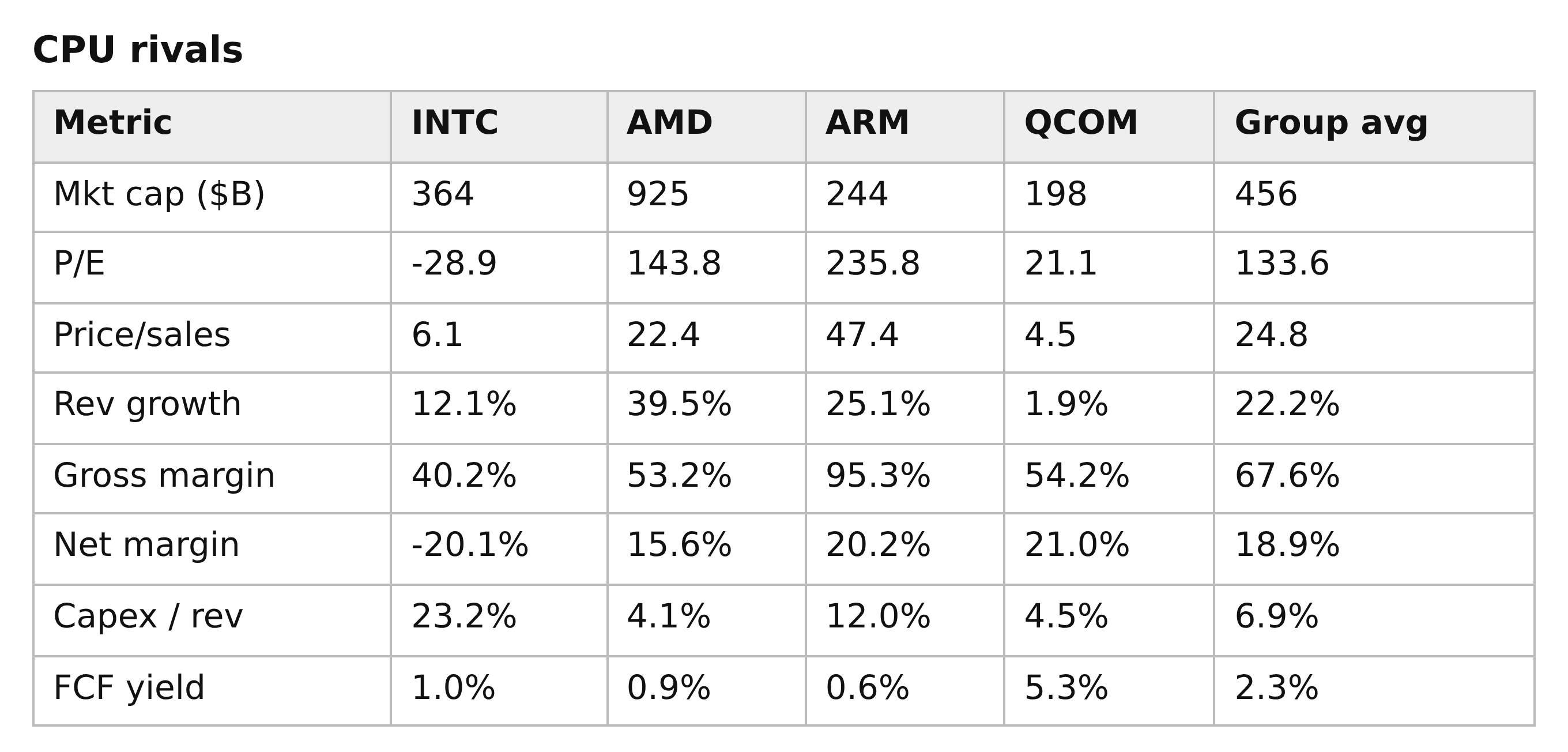
Group average excludes INTC. FMP; AMD, ARM, QCOM to June.
AMD: x86 CPUs and Instinct AI GPUs; Intel’s direct rival.
ARM (Arm Holdings): licenses the architecture behind Graviton, Axion, Cobalt and Nvidia Grace.
QCOM (Qualcomm): phone chips, now Arm-based Windows laptops.
AMD grows three times as fast as Intel while spending 4% of revenue on capex against Intel’s 23%, because TSMC makes its chips. Intel trades at 6.1x sales against AMD’s 22.4x: the market prices Intel as a manufacturer, not a chip designer. Qualcomm is the only rival growing slower, which shows the PC and phone markets are weak for everyone; AMD’s growth is coming from data centers.
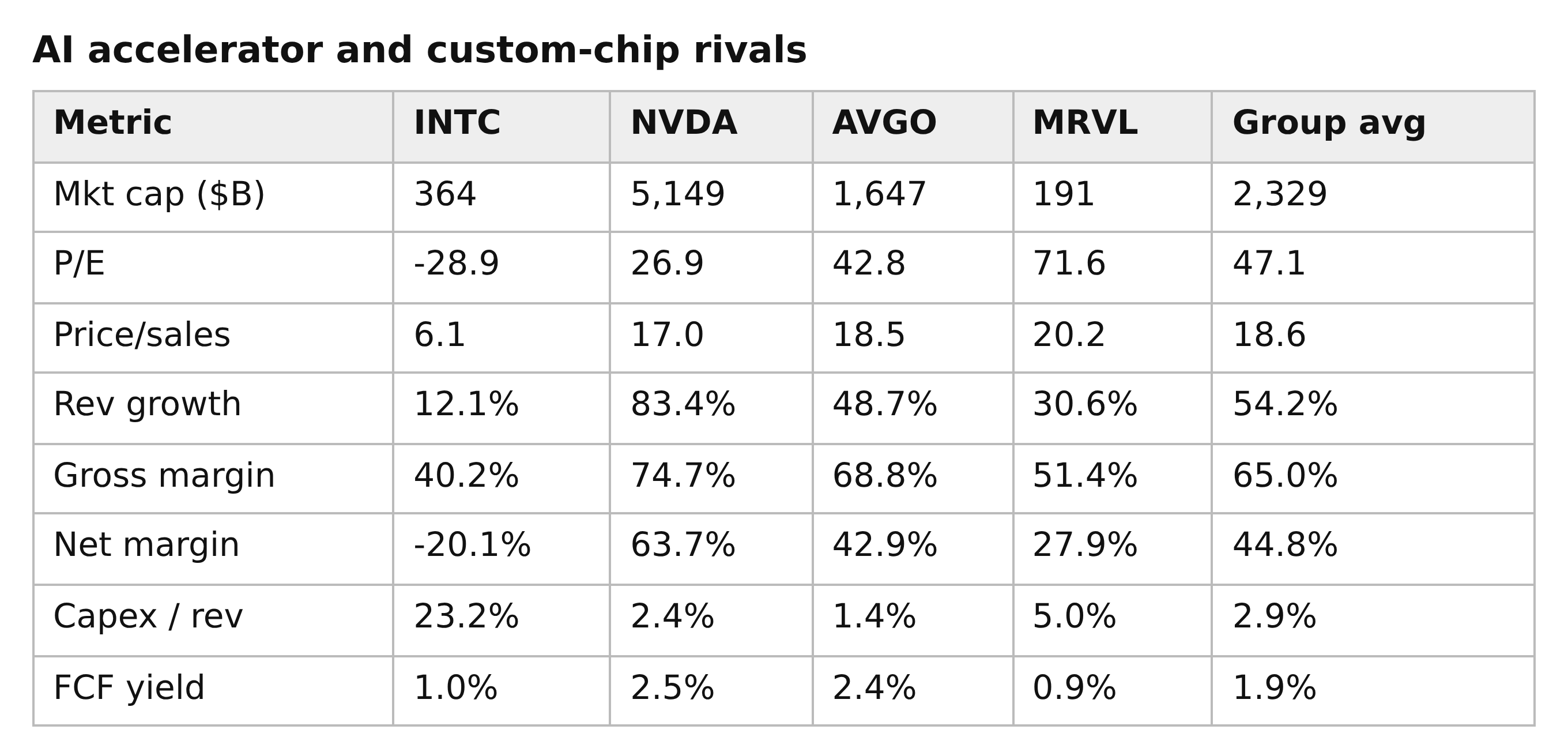
Group average excludes INTC. FMP; NVDA to July, AVGO and MRVL to August.
NVDA (Nvidia): AI GPUs and systems; evaluating Intel 18A, holds ~4% of Intel.
AVGO (Broadcom): custom AI chips (Google TPU) and networking.
MRVL (Marvell): custom AI chips and data-center connectivity.
These three own the AI chip market Intel is trying to enter with the GPU D-series. They spend 1-5% of revenue on capex because others manufacture for them; Intel spends 23%. Broadcom designs Google’s TPU, so a Google packaging order would make Intel a supplier to this group, not a competitor.
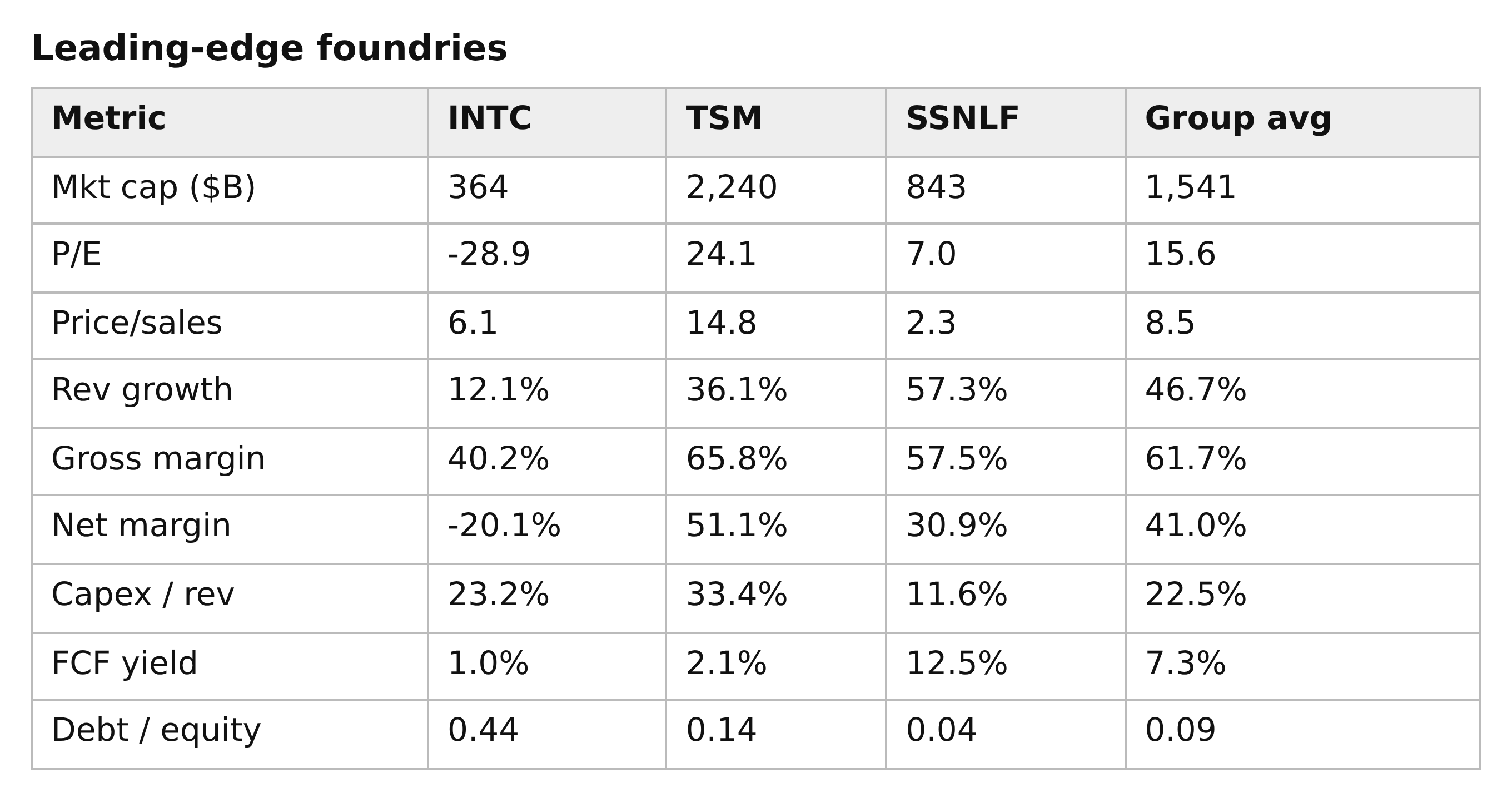
Group average excludes INTC. FMP; TSM to September, Samsung to June (whole group, incl. memory), converted to USD.
TSM (TSMC): dominant foundry; makes Nvidia, AMD, Apple, Broadcom chips.
SSNLF (Samsung): memory leader and the second leading-edge foundry.
TSMC spends a larger share of revenue on capex than Intel (33.4%) and still earns a 51% net margin, because its fabs are full of outside customers. Intel’s foundry lost $1.9B in Q3 with only $411M of outside revenue. Samsung’s growth and cash come from the memory price boom that is hurting Intel’s PC business.
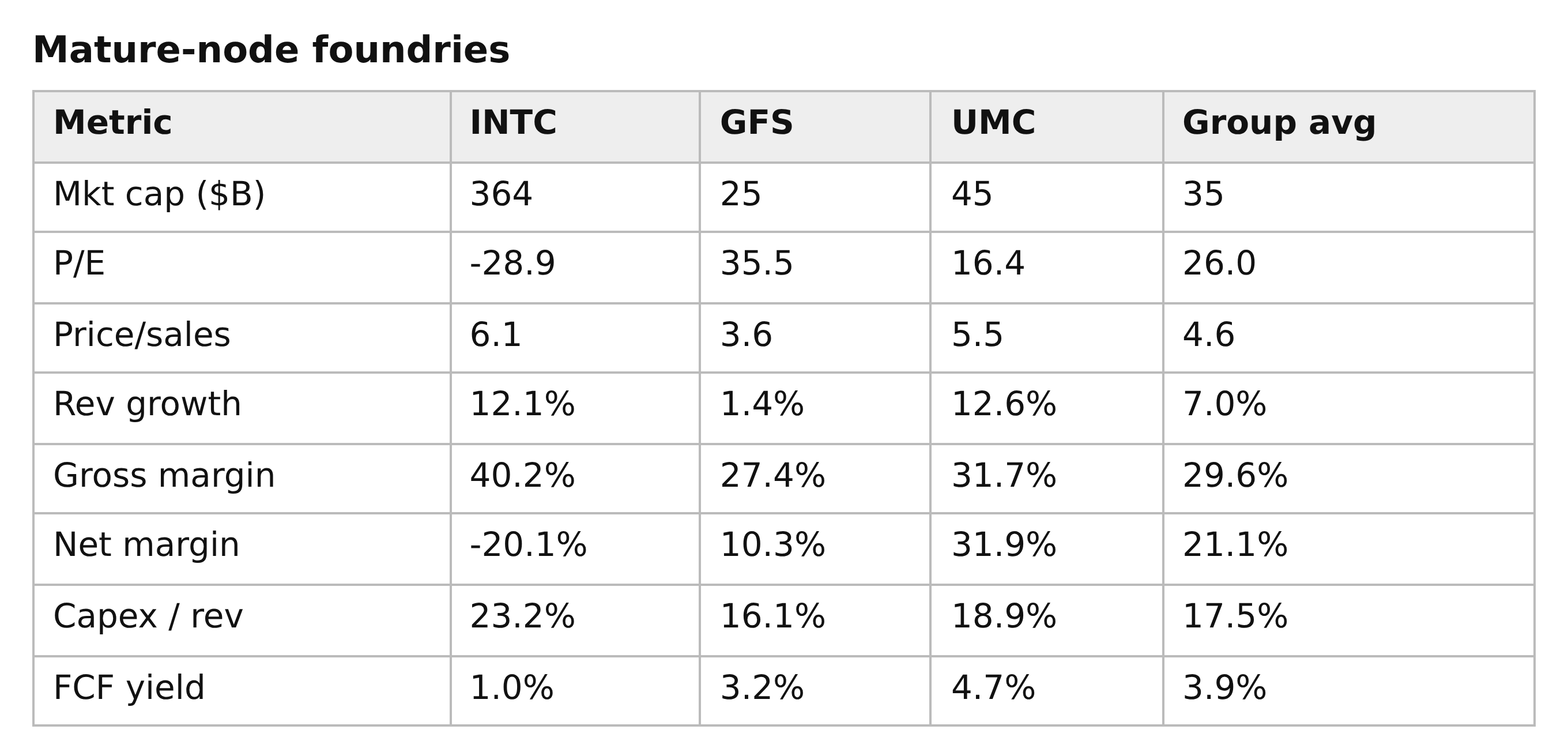
Group average excludes INTC. FMP; GFS to June, UMC to September.
GFS (GlobalFoundries): US-based mature-node foundry.
UMC: Taiwanese mature-node foundry; Intel partner on a 12nm process.
This is the one group Intel outgrows, and its gross margin is higher. At 6.1x sales Intel now trades close to UMC (5.5x), a mature-node foundry, which shows how little value the market gives the 18A and 14A plan today.
The groups together. Against chip designers, Intel is slower and carries a fab bill they don’t have. Against TSMC, it is a foundry without enough outside customers. Only against the mature-node foundries does it look better, and that is where its valuation now sits. The re-rating case needs a named customer on 18A or 14A Intel process.
Analyst consensus
Method. One row per firm (latest note), 90-day lookback. Weights by age: 0-30 days 1.0; 31-60 days 0.5; 61-90 days 0.2; older 0. Ratings and targets come from an aggregator list (analyst, firm, rating, action, target, date) dated 30 Oct.
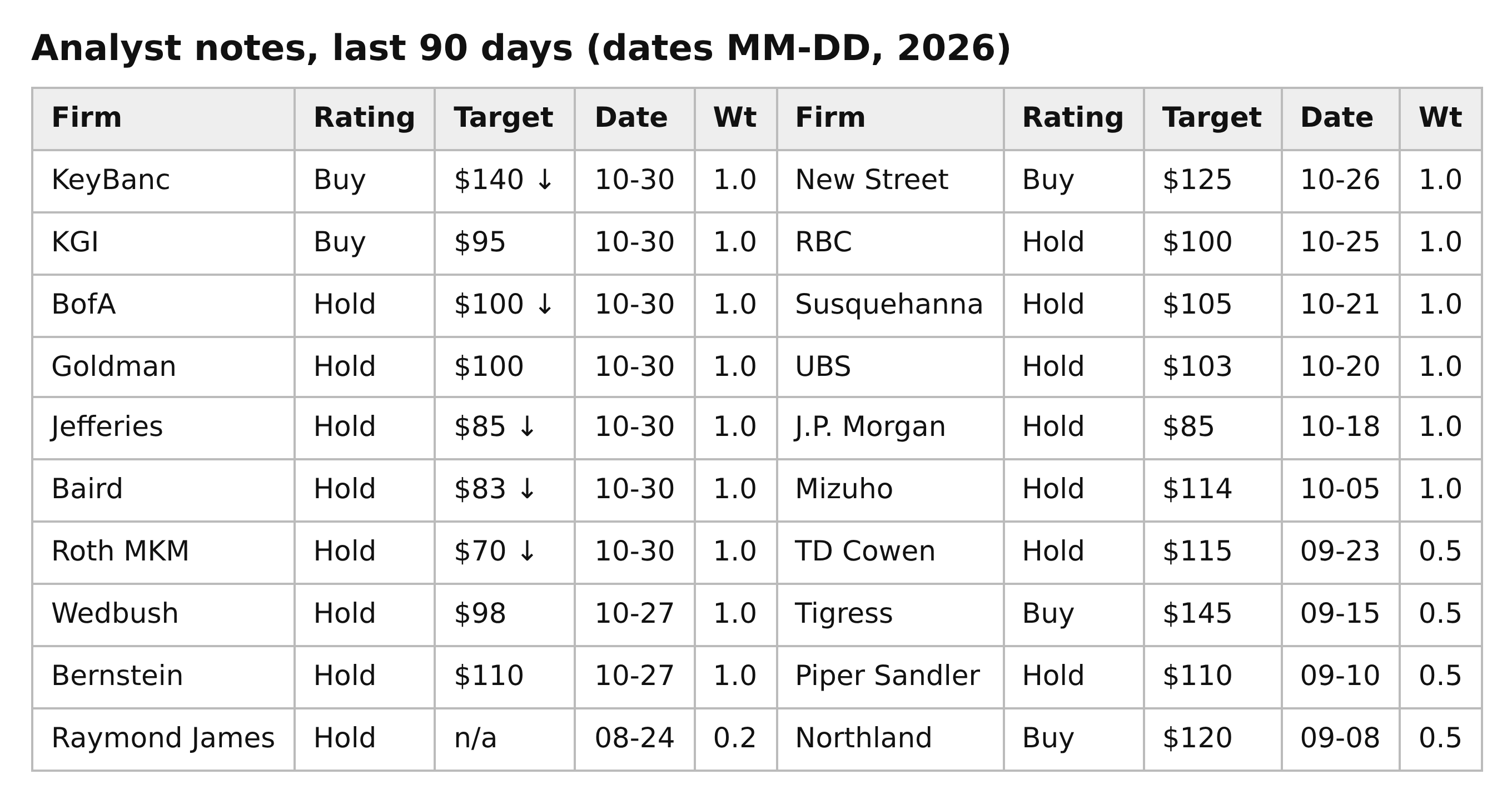
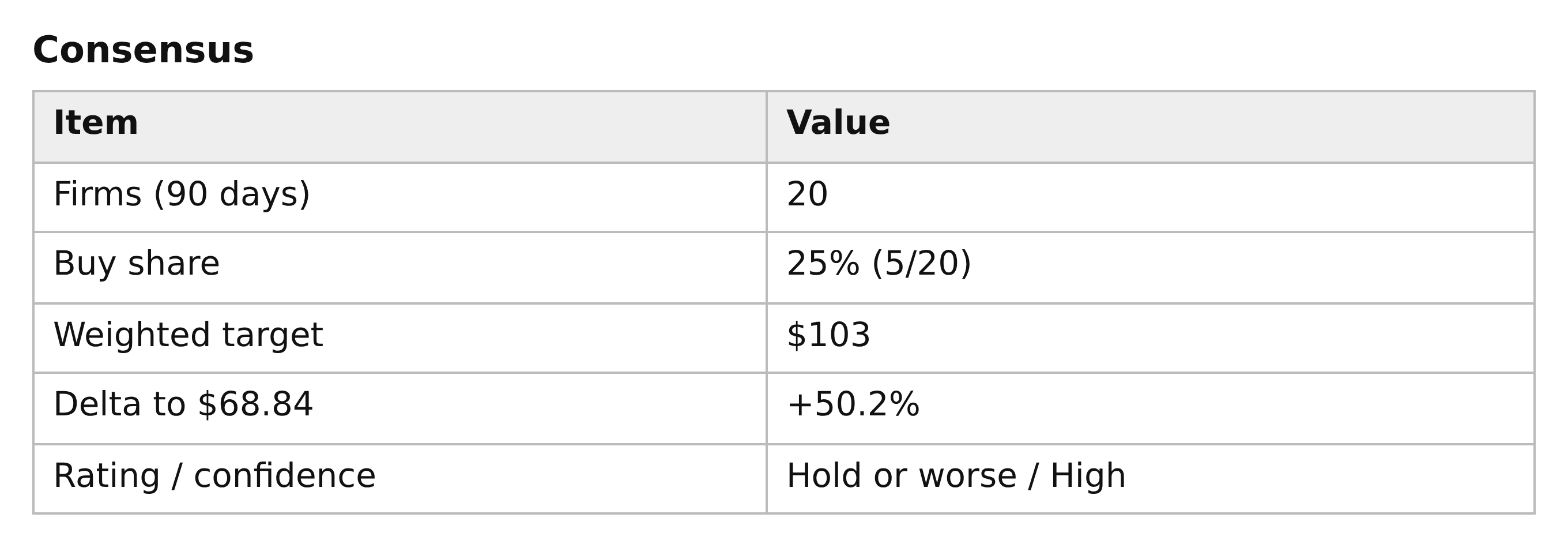
Score: 0/2 (rating -1, confidence +1).
Technical analysis
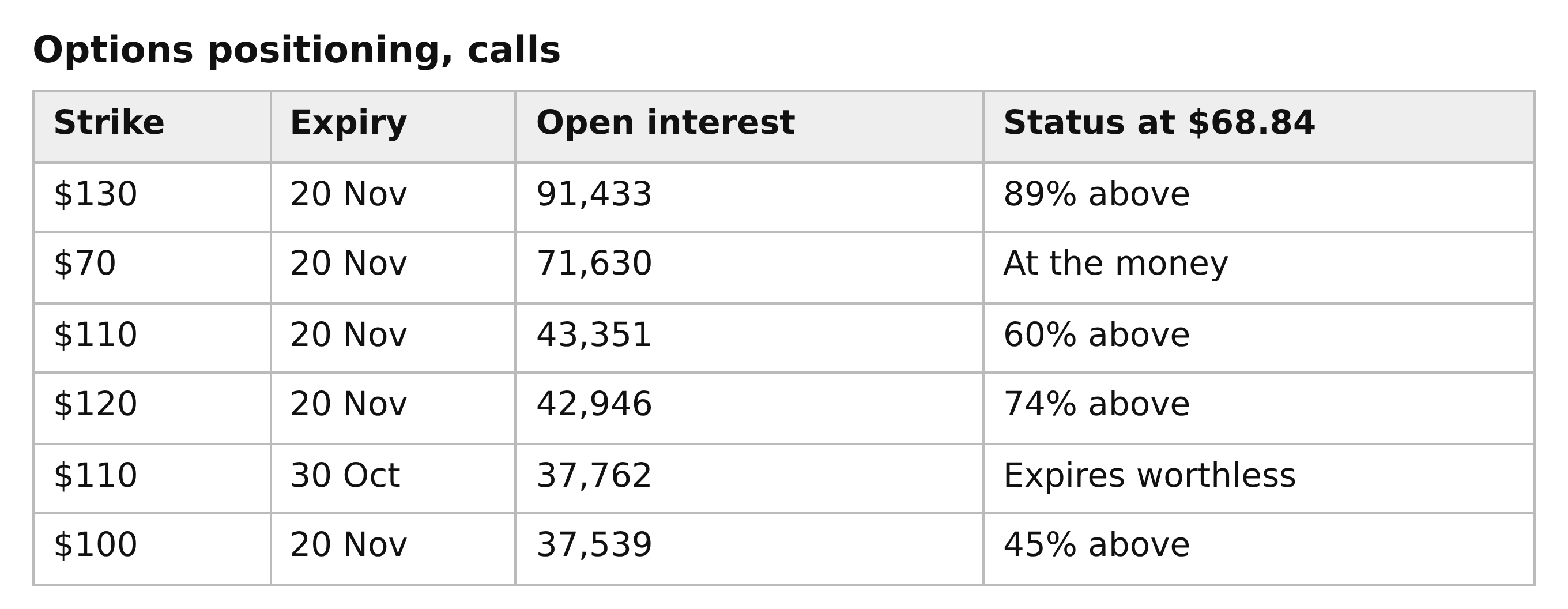
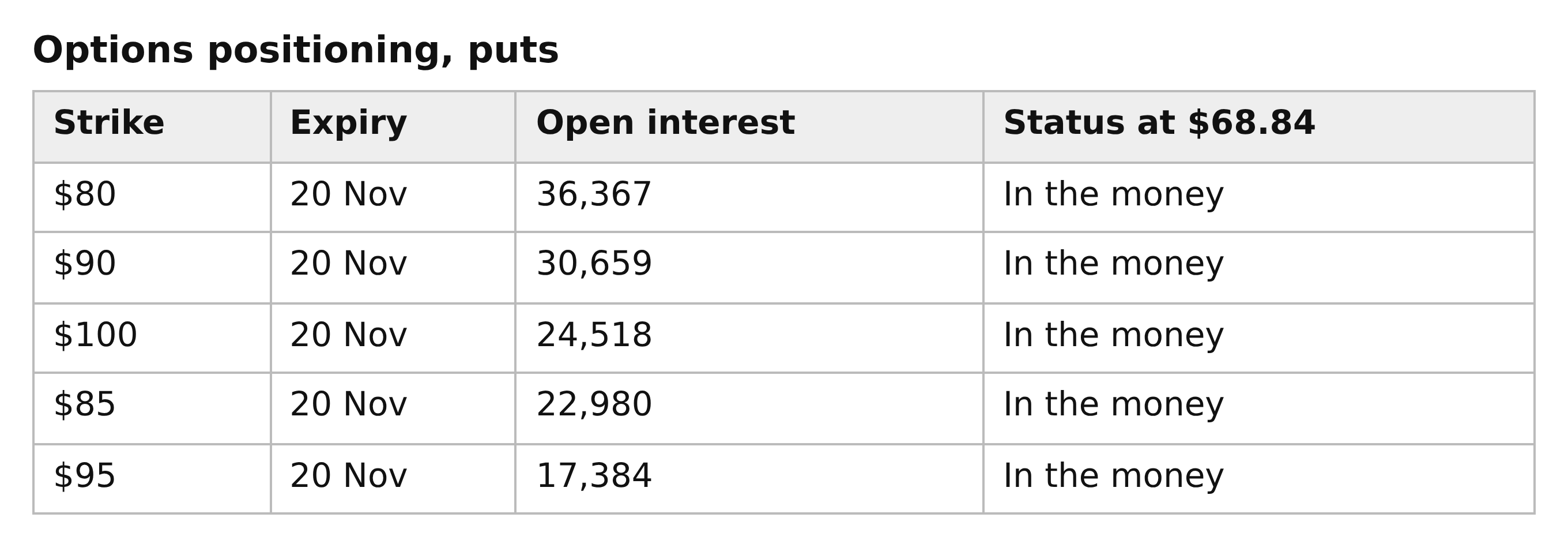
OptionCharts.io, highest open interest across 4 expiries to 20 Nov (calls and puts), taken before the results. P/C 0.78 by volume, 0.93 by open interest; IV rank 29.24% (Barchart).
The walls were set for a $92 stock. Call walls at $110-130 are now 60-90% above the price and are irrelevant until 20 Nov. All the large puts ($80-100) are in the money: holders who bought protection before the results are sitting on gains.
The $70 call is the new magnet. 71,630 November $70 calls were deep in the money at $92; at $68.84 they are at the money. Dealers who sold them hold stock as a hedge and will sell it if the price stays below $70, which can add pressure in a weak open; a hold above $70 would pin the price near that strike into 20 November.
Put profit-taking may support a bounce. In-the-money put holders who close their positions force dealers to buy back hedges, which tends to lift the price after a gap down. That bounce is what the $80-85 sell zone waits for.
Implied volatility. IV rank of 29% (implied volatility, the move options traders expect, was in the lower third of its one-year range) was measured before results and will reset higher today.
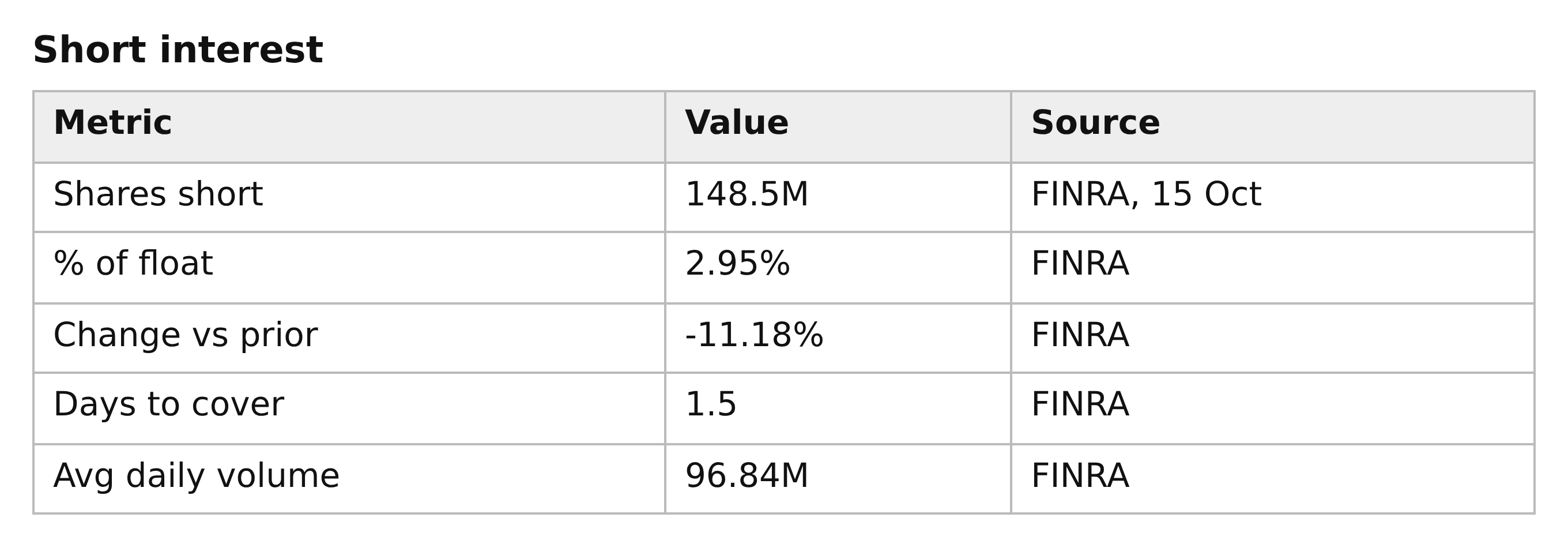
FINRA settlement of 15 Oct, the latest published.
Short interest. Under 3% of float with 1.5 days to cover: shorts were cutting before the results (-11%) and there is no squeeze fuel.
Volume. 134M shares traded on 29 Oct (pre-results) against about 97M on average, a rush into the report.
Score: 0/2. Sentiment 0 (both P/C ratios below 1 but open interest near 1); leverage 0 (no squeeze set-up, low IV rank, no near event).
What to watch. Whether $64.5 holds in the first sessions; the 30 Oct FINRA settlement; Fab 28 restart; any named 18A-P or 14A customer.
This research is for information only, not advice
2026/10/26
Semiconductors
Explore all company fundamental valuations, DCF intrinsic models, and thematic deep-dives in Semiconductors.
Quantitative Models
Automated daily equity screening across 6 quantitative factor models with 15-minute EMA regime confirmation.
More Research from the Desk
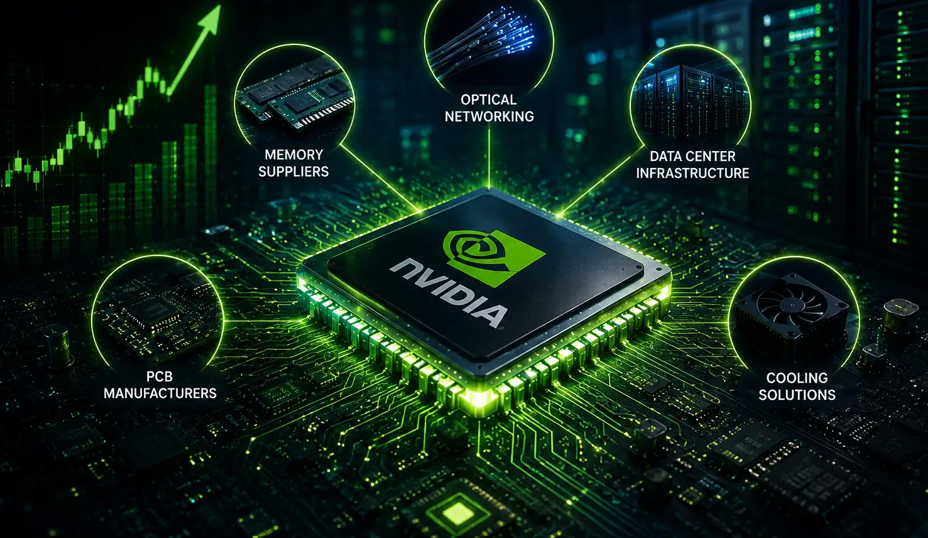
Nvidia’s $279B supply bill and $48B in stakes: a map of AI’s shortages and demand props
Nvidia is paying for the capacity it depends on, and the payments show where AI infrastructure shortages are. Supply and capacity commitments rose from $119B to $279B in one quarter, “primarily related to memory,” with $267B due by FY29. Supplier stakes are small beside that: $2B each in Lumentum and Marvell, Coherent and Synopsys. Non-marketable equity grew from $3.8B to $47.9B in a year, a further $25B is committed to AI model makers and infrastructure financiers, and guarantees reach up to $108.5B. The commitments rank memory as the tightest constraint, then power and data-centre capacity, then optics. The exposure runs both ways: Nvidia’s $23.7B of first-half equity gains and its commitments depend on the demand that payments help to create.
How Nvidia's rivals compete for OpenAI, Meta and Anthropic: AMD’s $80+B warrants and Broadcom’s $42B loan
Nvidia sells roughly 70% of AI chips at a 75% gross margin, and OpenAI, Meta and Anthropic each buy from it and from at least one rival. Its rivals cannot win on specification alone, so they pay to be the second source: AMD with warrants worth $84.3B to each of Meta and OpenAI, a 50-100% discount if AMD earns $14.1B to $28.1B per gigawatt; Broadcom with up to $42B of loans to Anthropic; and Cerebras with a warrant to OpenAI. Nvidia answers with investments in the same buyers and outside financing, not price cuts.