
Semiconductors
Independent fundamental valuations, DCF intrinsic models, and thematic research covering Semiconductors.
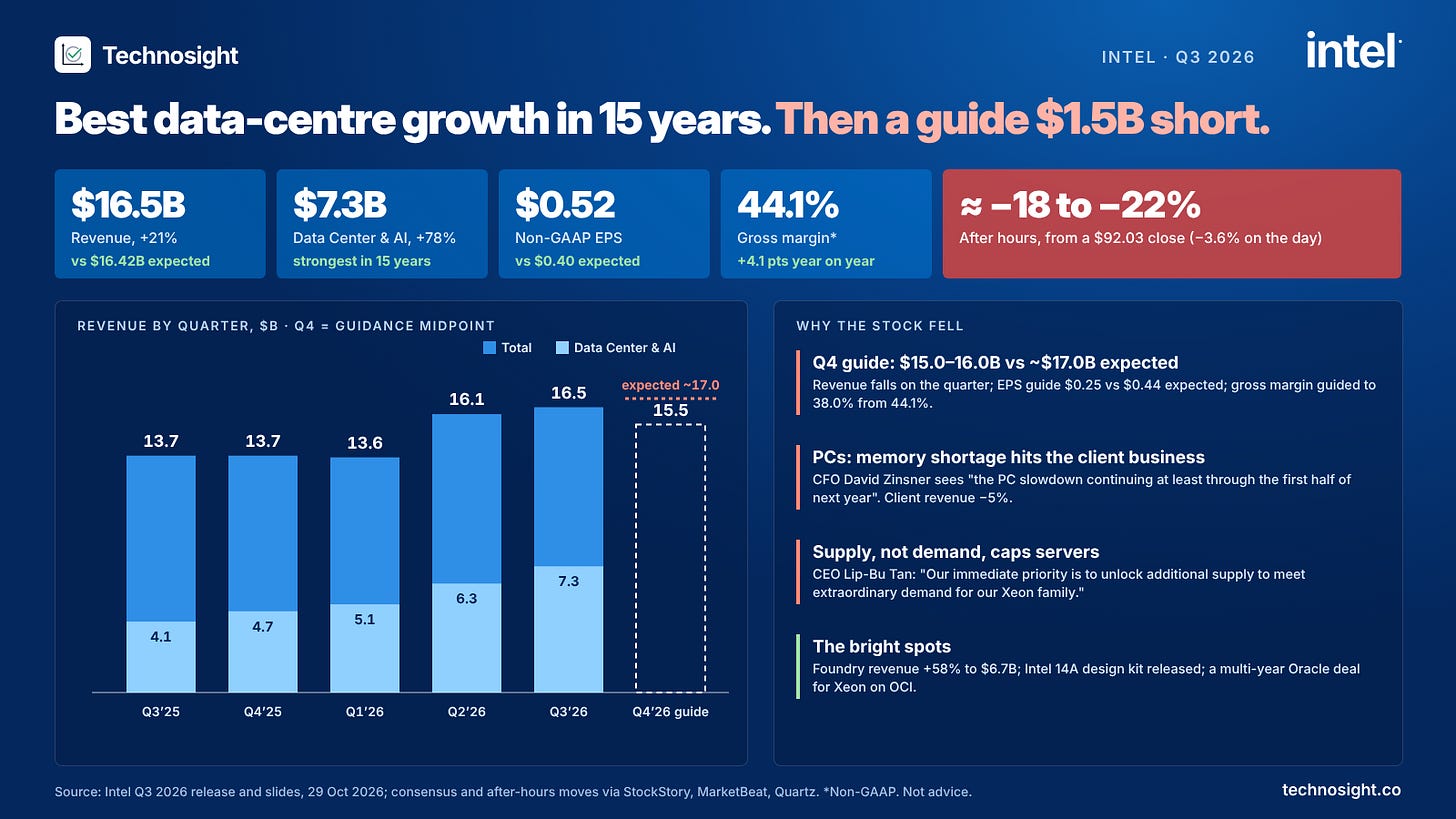
Intel Inc (INTC) earnings: data center jumps 78%, but Q4 guidance cut triggers 25% sell-off
Intel’s Q3 print delivered a stark contrast between a surging Data Center business (+78% YoY to $7.3B) and a severe guidance reset. While Q3 beat top- and bottom-line estimates ($16.5B revenue, $0.52 non-GAAP EPS), Q4 revenue guidance ($15.0B–$16.0B vs. $17.1B consensus) sent shares down ~25% pre-market. Management highlighted supply bottlenecks in substrate packaging, a memory-driven PC downturn running into H1 2027, and a $300M revenue hit from the Fab 28 explosion in Israel. With capex ramping for 18A/14A and 2027 expected to be cash-flow negative, we adjust the score from -2/10 to -1/10 Neutral.
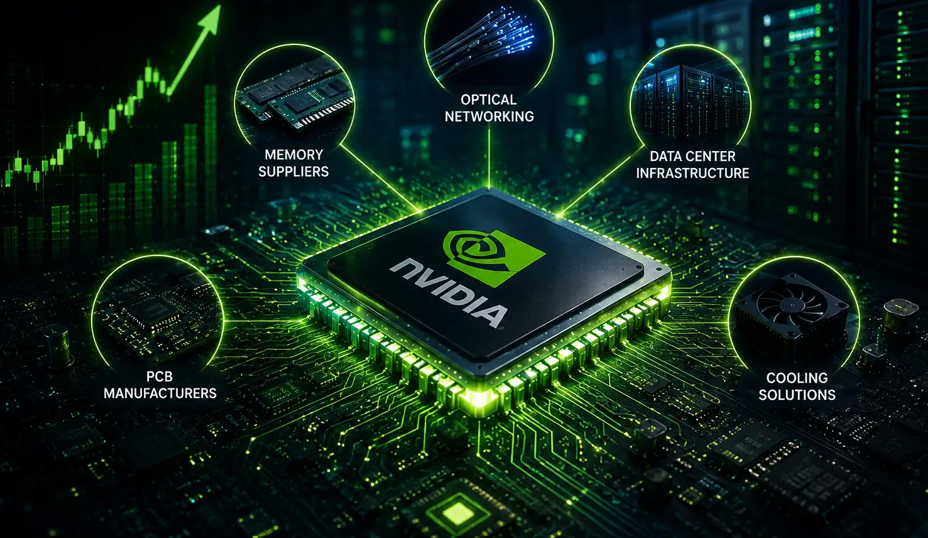
Nvidia’s $279B supply bill and $48B in stakes: a map of AI’s shortages and demand props
Nvidia is paying for the capacity it depends on, and the payments show where AI infrastructure shortages are. Supply and capacity commitments rose from $119B to $279B in one quarter, “primarily related to memory,” with $267B due by FY29. Supplier stakes are small beside that: $2B each in Lumentum and Marvell, Coherent and Synopsys. Non-marketable equity grew from $3.8B to $47.9B in a year, a further $25B is committed to AI model makers and infrastructure financiers, and guarantees reach up to $108.5B. The commitments rank memory as the tightest constraint, then power and data-centre capacity, then optics. The exposure runs both ways: Nvidia’s $23.7B of first-half equity gains and its commitments depend on the demand that payments help to create.
How Nvidia's rivals compete for OpenAI, Meta and Anthropic: AMD’s $80+B warrants and Broadcom’s $42B loan
Nvidia sells roughly 70% of AI chips at a 75% gross margin, and OpenAI, Meta and Anthropic each buy from it and from at least one rival. Its rivals cannot win on specification alone, so they pay to be the second source: AMD with warrants worth $84.3B to each of Meta and OpenAI, a 50-100% discount if AMD earns $14.1B to $28.1B per gigawatt; Broadcom with up to $42B of loans to Anthropic; and Cerebras with a warrant to OpenAI. Nvidia answers with investments in the same buyers and outside financing, not price cuts.
Companies who dilute investor equity to earn revenue: $173B warrants by AMD
Four of the biggest AI chip buyers are paid in their suppliers’ stock for buying. Only Astera booked a cost so far (2.6% of Q2 revenue), but at today’s prices the warrants are worth about $2B at Marvell and $173B at AMD. The bill for these warrants arrives when tranches vest.
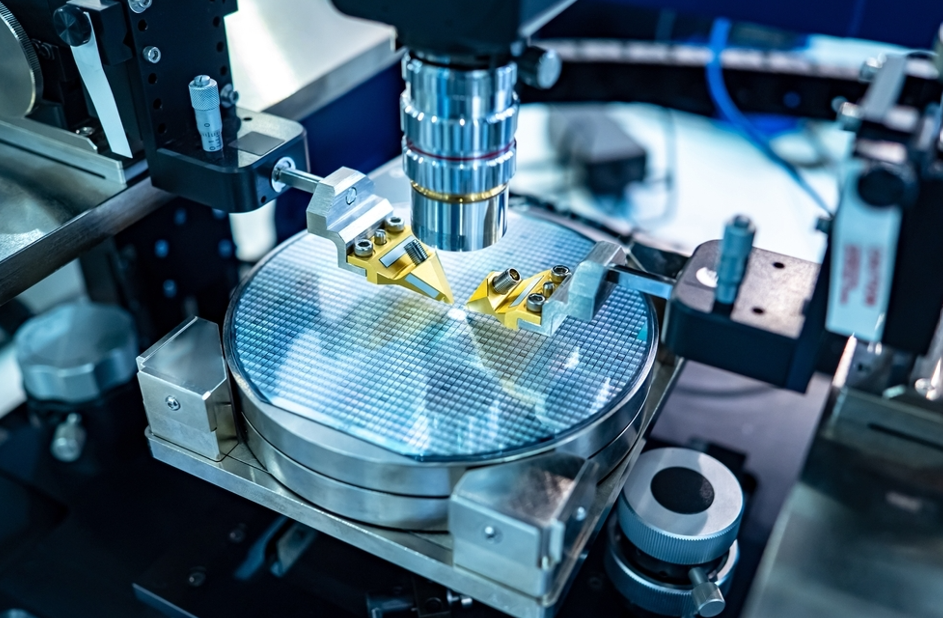
Wafer Fab Equipment: $150B market, 23% YoY. Foundry/Logic and HBM Intensity drive growth
Wafer-Fab Equipment (WFE) spending has accelerated to $150B+ in 2026 as AI infrastructure transitions to complex 3D integration. While macro forecasts project ~20%+ annual growth through 2027, top-line figures mask sub-segment divergence. Foundry/Logic (led by TSMC’s N2/A16 transition) and DRAM (driven by HBM3e/HBM4 wafer intensity) take ~75% of market growth. Stock selection hinges on tool exposure: ASML commands a leading-edge lithography monopoly constrained only by shipping capacity; KLA (KLAC) offers high-margin (+62.4% GM) as gate-all-around adds defect steps; Lam Research (LRCX) is cushioned by a 37% service base; and Applied Materials (AMAT) provides broad multi-node exposure.
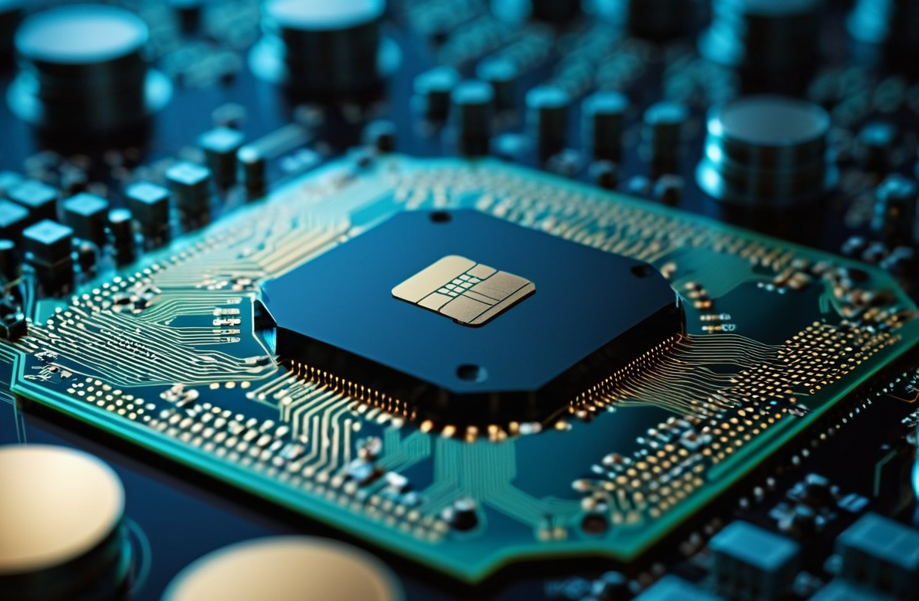
Who wins in semiconductor design
Chip design captures more durable value than chip manufacturing, and within design, the EDA "toll booth": Synopsys, Cadence, and Siemens EDA, controlling ~85% of the the market is the lowest-risk way to own the AI semiconductor buildout. Every company from Nvidia to a hyperscaler building its own silicon, still license EDA software to produce a chip. Between the two investable names, Cadence's stronger execution and margins are against Synopsys's larger scale and bolder (if debt-funded) bet on Ansys becoming a second growth engine.
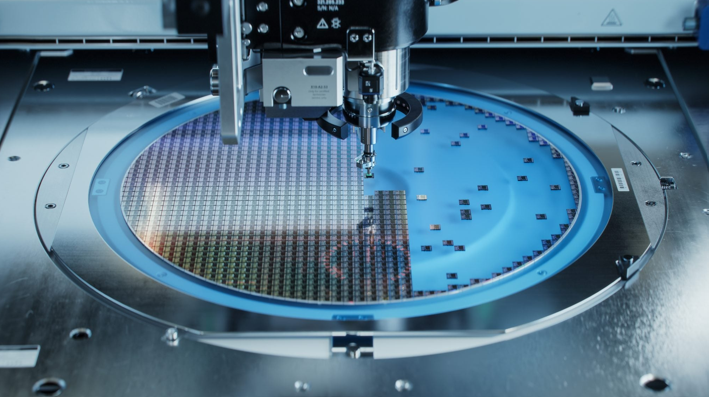
AI and Advanced Packaging: the developments, who's leading, and what to own
Bottlenecks are deepening across substrates, glass, thermal and optics. Ex-TSMC exec called brute-force scaling ‘violent’. The highest conviction: TSM +5/10 and KLIC +5/10
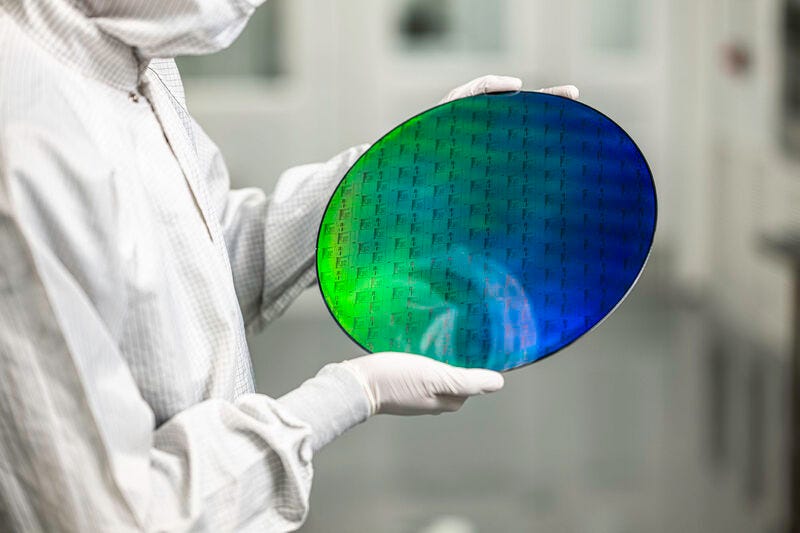
AI and Laser Shortage: one scarce semiconductor substrate drove 10-100x rallies, will they rally again?
High confidence that the scarcity persists 2- 4 years, enough for a rally. Market is bullish / execution is strong at AXT (+4/10) and AAOI (+5/10), neutral to bearish on LITE (+5/10) and COHR (+2/10)
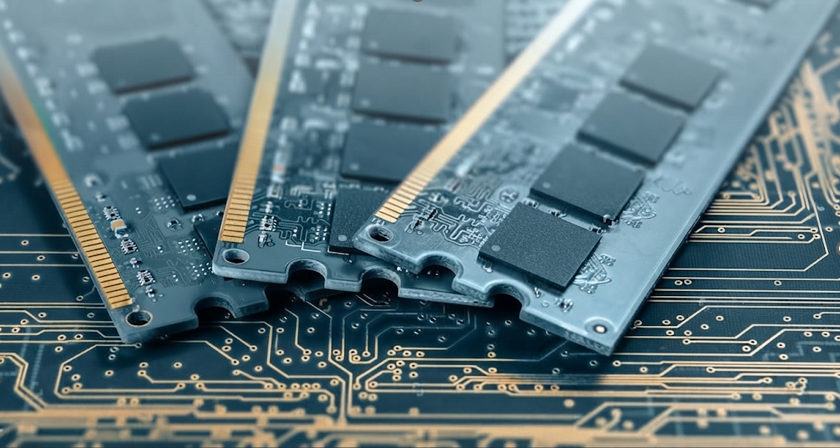
Memory: how long will the thesis last? Lessons from Micron, SK Hynix and SanDisk
According to SK Hynix, memory shortage will last past 2030. Construction timelines and move to HBM means the earliest capacity in mid 2027. What this mean for individual stocks, depends...